
Women in Film History 2026: Wrapping Up Part I of This Year’s Project
A look back at the incredible women in film history highlighted for Women’s History Month 2026.
Once again, March has flown by, and just like that, another Women’s History Month is officially in the books. Since 2017, I’ve spent every March profiling trailblazing women in film history—some celebrated, many, unfortunately, overlooked, but all essential to the evolution of the entertainment industry. What started as a passion project nine years ago has grown into one of my favorite annual traditions, and this year’s journey has been no different.
Balancing Research, Writing, and Content Creation
However, as this project continues to grow, I’ve really wanted to push myself in new creative directions. In addition to researching and writing full-length biographies of each honoree, I’ve also been experimenting with creating more reels, carousels, and other visual content to help bring their stories to life. It’s been fun to stretch my design skills, experiment with new formats, and navigate the frustrating yet ever-shifting world of social media trends (though, honestly, can Instagram stop updating the algorithm every half second?)—especially as a one-woman show fueled by lots of caffeine.
But as the saying goes: “The road to hell is paved with good intentions.” I set out to complete all 31 profiles during March, and—well—I didn’t quite get there. I finished 15. Same as last year. And honestly? Even though I didn’t meet my goal, I’m still proud of that. Every profile was carefully researched, thoroughly fact-checked (at least to the best of my abilities), and created to honor these women and their legacies. Quality over quantity, am I right?
Why This Matters (Now More Than Ever)
To be 100% honest, I think most of us can agree that 2026 has been a rough year, but March was especially difficult. With everything happening in the world right now, it’s been challenging to devote time, focus, and emotional energy to social media. Most days, it feels trivial and silly; very Marie “Let Them Eat Cake” Antoinette.
But all that being said, documenting women in film history is still incredibly important to me. Helena Dayton Smith, the first woman I profiled this year, was active in animation over a hundred years ago, yet she and Lotte Reiniger, whom I profiled back in 2019, are often overlooked in favor of “bigger names” like J. Stuart Blackton, Émile Cohl, Winsor McCay, or even Walt Disney. We wouldn’t have claymation classics without her and her work, yet I had never even heard of her before January of this year, when I started my research for the project.
These stories are more than just names, dates, and IMDB credits. They represent real women whose creativity has shaped genres, perseverance has challenged industry barriers, and innovations have influenced the movies and TV shows we enjoy today. Preserving and sharing their contributions should be a long-term commitment, not just a one-month effort.
Meet the First 15 Women of 2026
Even though I didn’t reach the original number I intended, I was able to shine a spotlight on 15 extraordinary women—directors, editors, writers, actors, designers, and more—who deserve recognition. Each profile includes an Instagram carousel and a longer written biography exploring her life, accomplishments, and impact on film history.
You’ll find each woman’s embedded carousel and full write-up below; if you’re reading this on mobile, please give your browser a second to load the embeds!
HELENA SMITH DAYTON
Helena Smith Dayton (1883–1960) was an American filmmaker, painter, and sculptor whose creative experiments helped open new doors in early animation. During the 1910s and 1920s—an era when the film industry was still exploring its artistic and technical limits—Dayton was a trailblazer, among the first artists to experiment with clay animation and stop-motion techniques. Her pioneering work earned her a significant milestone: she is widely recognized as the first American woman to experiment with clay animation, a technique that has since become a vital part of modern stop-motion filmmaking.
Born in 1883, Dayton was trained as a visual artist before entering the emerging field of motion pictures. Her background in sculpture and painting was especially valuable in animation, where creating expressive characters and physical movement required a strong understanding of form, texture, and gesture. At a time when animation was still mainly hand-drawn, Dayton chose sculpted clay figures as her medium, bringing three-dimensional characters to life frame by frame.

Dayton’s experiments occurred during a time of rapid innovation in cinema. The 1910s were a period when filmmakers explored new visual effects, editing styles, and storytelling techniques. In this creative environment, Dayton started making animated shorts using clay models that she carefully repositioned between photographed frames. This painstaking process—now called stop-motion animation—created the illusion of movement when the images were projected in sequence.
In 1917, Dayton showcased several of her clay animation films in New York, captivating audiences with whimsical characters and imaginative storytelling that demonstrated the expressive potential of sculpted figures on screen. Contemporary newspapers and trade publications called her work inventive and technically impressive, highlighting the novelty of seeing clay sculptures appear to move and perform before viewers’ eyes. Although only limited documentation of her films remains today, these screenings marked an important milestone in the development of American animation.
What makes Dayton’s achievements especially meaningful is the context in which she worked. The early film industry provided few opportunities for women to take on technical or experimental roles, especially in new fields like animation and visual effects. Still, Dayton pursued her creative interests with determination, combining her training as a sculptor with the possibilities of motion-picture technology. Her work helped show that animation could go beyond drawings to include sculptural forms and physical models.

Today, clay animation is regarded as one of the most unique forms of stop-motion filmmaking, eventually gaining popularity through studios and filmmakers worldwide. While the technique changed significantly throughout the twentieth century, pioneers like Dayton helped lay its artistic groundwork. Her willingness to experiment with materials and movement created new opportunities for future animators.
Dayton’s story serves as a reminder that women have been innovators in film since the medium’s earliest decades. Although she may not be as widely known as some of her contemporaries, her contributions represent an important chapter in the history of animation. By merging sculpture, storytelling, and cinematic experimentation, Helena Smith Dayton helped advance animation and proved that creativity and curiosity could push the boundaries of a still-evolving art form.
More than a hundred years later, her pioneering spirit continues to inspire historians, artists, and filmmakers who recognize the crucial role women have played in shaping cinema history.
EDNA WILLIAMS
Edna Williams (1887–1965) was an American songwriter, international film distributor, and pioneering film executive whose career helped shape the way early motion pictures reached audiences around the world. At a time when women’s participation in the film industry was often limited to performance, secretarial work, or uncredited creative roles, Williams carved out a path in one of the most challenging and influential parts of the business: getting films seen. Her journey—from writing songs for silent films in the 1910s to founding her own international distribution company in 1926—reflects both her professional versatility and her determination to build a long-lasting place for women in cinema’s evolving business landscape.

Williams began her career as a songwriter for early films, contributing compositions to accompany silent-era productions. Music was a crucial part of film exhibition in the 1910s, and her work helped shape the emotional tone of scenes long before synchronized sound became standard; her biggest hit was 1913’s “Over the Great Divide.” Yet Williams’ ambitions reached far beyond the creative sphere. She had a keen understanding of how films circulated, reached theaters, and found audiences—skills that would become essential as the industry rapidly expanded.
By the mid-1910s, Williams made a bold transition into film distribution, one of the least accessible and most male-dominated areas of the industry. While many women worked as writers, editors, or even directors during the silent era, far fewer held executive positions in distribution, where contracts, territories, and international sales determined which films succeeded financially. Williams became one of the earliest female film executives, navigating a landscape shaped by powerful studios, shifting markets, and global competition.

Her greatest accomplishment came in 1926, when she co-founded the independent distribution company Ednella Export with vaudeville star Nella Walker, a close collaborator and likely romantic partner. At a time when the Hollywood studio system was becoming increasingly centralized and vertically integrated, launching an independent distribution firm was no small feat. Ednella Export specialized in selling American films to overseas markets, helping expand the international reach of U.S. cinema during a crucial period of global growth. By focusing on export distribution, Williams positioned herself at the forefront of the industry’s international expansion—an area where few women had any authority at all.
Ednella Export also represented something equally significant: a rare space where two women ran a company during an era when female leadership in Hollywood was steadily shrinking. As the silent era gave way to the sound era, many women who had once held creative and executive roles found themselves pushed out by new corporate structures. Williams’ work defied this trend. She not only created a business that survived the tumultuous transition to sound but also demonstrated that women could lead distribution efforts with confidence, expertise, and a far-reaching perspective.
Although the company didn’t last even a year, Williams and Walker spent the rest of their lives together. Walker gained fame as her acting career flourished in the early 1930s through the 1950s, while Williams quietly supported her behind the scenes. Williams died in Los Angeles of metastatic cancer on July 4, 1965, at age 78. Walker died on March 22, 1971, at age 85. They are buried together in one crypt at Forest Lawn Cemetery in Los Angeles, California.
Williams’ story serves as a reminder that women have shaped every corner of film history—not just the artistic side of filmmaking, but also the commercial, logistical, and international systems that allowed movies to travel the world. Her career highlights the essential but often overlooked labor of negotiating rights, managing territories, and building global audiences—work that sustained the industry and enabled American cinema to flourish internationally.
Though her name is not widely known today, Williams’ contributions endure in the foundations of modern film distribution. She forged a path where few women were allowed to walk, built a business alongside another accomplished woman, and expanded the reach of American film during one of the industry’s most transformative eras. Her legacy is one of persistence, innovation, and quiet but powerful impact—making her a woman whose story deserves to be honored and remembered.
AUDRIE ALSPAUGH
Audrie Alspaugh (1888–1965) was an American journalist, cultural commentator, and one of the earliest full-time film critics in the United States—an extraordinary achievement in an era when both film criticism and women’s place in journalism were still evolving. Writing under the pen name “Kitty Kelly” for the Chicago Tribune from 1914 to 1918, Alspaugh helped define what film criticism could be at a moment when movies were still fighting for recognition as a serious art form. Her column, “Flickerings from Filmland,” blended opinion, humor, and sharp cultural observation, reaching well over 100,000 readers and positioning her as a powerful voice in early American cinema culture.
When Alspaugh began writing, the idea of regularly reviewing films was still new. The motion-picture industry was expanding rapidly—studios were forming, the star system was emerging, and feature films were beginning to dominate exhibition circuits. Yet many newspapers still treated movies as lowbrow entertainment, undeserving of the critical attention afforded to theater or literature. Into this gap stepped Alspaugh, who approached films with a seriousness, wit, and authority that helped legitimize them for everyday readers. Her 1965 obituary even claimed she was the nation’s first full-time motion picture critic, a testament to just how pioneering her work was.

As “Kitty Kelly,” Alspaugh encouraged audiences—especially the Tribune’s large readership of women—to watch films with a critical eye. She urged them to pay attention to narrative construction, editing, atmosphere, and the subtle choices that shape a movie’s emotional impact. At a time when few critics analyzed the filmmaking process and even fewer were women, she modeled a new kind of film writing: analytical, accessible, and unafraid to take movies seriously. Her influence was especially strong across the Midwest, where studios and exhibitors closely monitored her reactions; her reviews were known for “making or breaking” films with regional audiences.
Alspaugh’s reach extended far beyond Chicago thanks to the Tribune’s expansive syndication network, supported by companies like Western Union and AT&T. Her columns appeared in newspapers across the Midwest, shaping public opinion well before national critics became household names.

One of the most remarkable moments in her career came in March 1915, when she traveled with a delegation from Chicago to California to cover the dedication of producer Carl Laemmle’s new motion-picture production facility: Universal City, now part of Universal Studios Hollywood. Over the course of the trip, she filed four special editions of “Flickerings from Filmland.” In her final dispatch—datelined “Hollywood, Cal.”—she published one of the earliest known newspaper uses of the word Hollywood in this context.
Alspaugh vividly described Universal’s opening-day festivities, noting how she stood among the crowd “when amidst music, gun salutes, and cheering, the flag went up, the Universal banner swept the air, and the gates went open.” Her writing helped brand Universal for Midwest audiences, functioning much like the studio-sponsored junkets that would become common decades later. She also spotlighted fascinating industry figures, including an interview with Universal City’s chief of police, Laura Oakley, whom she described as “perhaps the only woman in the world holding that office.”
Alspaugh’s story serves as a reminder that women have shaped film culture not only through acting, writing, and directing, but also through the essential interpretive work of criticism. She taught audiences how to think about movies, helped newspapers recognize the importance of covering them seriously, and expanded the cultural conversation around film at a pivotal moment in its development.
She wasn’t just documenting film history—she was helping create it. Her presence in early film journalism paved the way for generations of women critics whose voices continue to shape how we understand cinema today.
HELEN HOLMES
Helen Holmes (1892–1950) was an American actress, stunt performer, screenwriter, producer, director, and animal trainer whose remarkable versatility made her one of the most dynamic women of the silent film era. Best known for her fearless leading role in the Kalem Company’s long-running action serial The Hazards of Helen, Holmes redefined what women could do on screen and behind the scenes at a time when Hollywood was still finding its identity.
Born in 1892, Holmes entered the film industry just as serialized storytelling was becoming one of cinema’s most popular formats. She signed with the Kalem Company in the early 1910s and quickly distinguished herself as an actress with a remarkable physical presence. When she was cast as the heroic telegrapher “Helen” in The Hazards of Helen (1914–1917), she became a household name. The character—resourceful, courageous, and unstoppable—reflected Holmes’ own skills and personality. Unlike many actresses of the period, Holmes performed her own stunts, earning a reputation as one of the most daring performers in the industry.
The serial itself was groundbreaking. Over more than 100 episodes, Holmes’ “Helen” leapt from runaway trains, chased down villains, rescued passengers, and performed death-defying feats that thrilled audiences across the country. These action-heavy episodes made her one of cinema’s earliest stuntwomen—decades before Hollywood fully recognized stunt work as a profession. Her athleticism and fearlessness challenged contemporary expectations of femininity, proving that women on screen could embody strength, intelligence, and physical heroism.
Yet acting was only one part of Holmes’ career. She expanded her creative range by working as a screenwriter and director, often contributing to stories that highlighted adventurous, capable female characters. She later co-founded her own production company with her frequent collaborator and husband, J.P. McGowan, where she continued to produce and star in action films. In an era when women routinely held leadership roles in silent-era filmmaking—but whose contributions were later overshadowed—Holmes stood out for her independence and her insistence on creative control.

Holmes’ talents extended beyond the studio lot, too. She grew up around animals and became a skilled animal trainer, frequently incorporating her horses into her film work. Her understanding of movement, timing, and partnership with animals made many of her stunts possible. This combination of artistry and technical knowledge placed her in a rare category of multi-skilled women whose behind-the-scenes expertise helped shape the stories audiences loved.
As Hollywood transitioned into the 1920s and beyond, the industry shifted away from the independent, flexible working environments of the silent era. Nevertheless, Holmes’ legacy endured. Her films left an indelible mark on action cinema, and her serial hero paved the way for later generations of women in adventure roles—from television cowgirls to modern action stars.
Holmes’ story serves as a reminder that women have been shaping film history not only through performance, but through daring physical work, creative leadership, and fearless innovation. She was a pioneer who expanded the possibilities for what women could do on screen, laying the foundation for stuntwomen, filmmakers, and action heroes who followed.
Holmes didn’t just star in action films—she helped invent them. Her legacy deserves to be celebrated, remembered, and spotlighted as an essential chapter in the history of women in film.
LENORE COFFEE
Few screenwriters of Hollywood’s Golden Age worked as quietly—and as effectively—behind the scenes as Lenore Coffee (1896–1984). A prolific writer whose career spanned from the silent era through the height of the studio system, Coffee helped shape some of the era’s most emotionally resonant films. As a novelist, playwright, continuity girl, title writer, and screenwriter, she built a multifaceted career in an industry where women’s creative labor was often overlooked.
Coffee first entered the entertainment industry through stage and literary circles in Northern California before moving into film in the 1920s. During the silent era, she served as a continuity girl and title writer—roles that demanded a keen eye for story structure and visual storytelling. These early experiences gave Coffee a deep understanding of how scripts translate to the screen, a knowledge that would later define her career as a screenwriter.
By the early 1930s, Coffee had established herself as a writer in Hollywood, contributing original stories, dialogue, and screenplay adaptations for major studios. She gained a reputation for adapting women’s fiction—novels and plays focused on complex female characters and emotional relationships. At a time when studios often marketed melodramas and family dramas to female audiences, Coffee’s sensitivity to character and theme made her a valuable collaborator.
Her talents went beyond simple adaptation. Inside the studio system, Coffee earned a reputation as a “script doctor,” a writer brought in to fix troubled screenplays. This work required both creativity and tact; writers like Coffee had to polish dialogue, restructure scenes, and deepen character motivations without disrupting the production schedule. Although these contributions were often uncredited, they played a vital role in shaping many films of that time.
"This was very fortunate [for] me, because later on I became something of an expert on editing and titling what were called 'sick' pictures that were lying on the shelf, not fit to be released. I called these my 'rescue' jobs, for with ingenious rearranging of the order of scenes or whole episodes, and new subtitles, they could very often be salvaged." - Storyline: Recollections of a Hollywood Screenwriter (1973)
One of Coffee’s most notable achievements was her role in the Warner Bros. drama Four Daughters (1938), which told the story of four sisters navigating love, ambition, and family loyalty. The film was well-received by audiences and critics, earning several Oscar nominations. Coffee was nominated for Best Adapted Screenplay along with Julius J. Epstein at the 11th Academy Awards for her work on the screenplay. At a time when few women were recognized in screenwriting, this nomination was an important milestone in her career.
Throughout the 1930s and 1940s, Coffee continued to write for major studios such as Warner Bros., MGM, and RKO. Her filmography includes notable titles such as Torch Singer (1933), The Great Lie (1941), Old Acquaintance (1943), and Till We Meet Again (1943). Whether adapting literary works or refining existing scripts, Coffee’s writing consistently shows emotional insight and clear storytelling. Like many writers in Hollywood’s studio system, Coffee rarely received public praise like directors or stars. However, her impact was present in many films that shaped mid-20th-century cinema.
Coffee’s story serves as a reminder that the history of film was shaped not only by the figures in front of the camera but also by the women whose words and ideas shaped the stories audiences saw on screen. Through her adaptability, craftsmanship, and persistence, Coffee helped pave the way for future generations of women screenwriters in Hollywood—proving that some of the most powerful voices in film history worked quietly behind the typewriter.
SABAHAT HÜSAMETTIN FILMER
Sabahat Hüsamettin Filmer (1898–1991) stands as one of the foundational figures of early Turkish cinema—an innovator whose vision, determination, and entrepreneurial spirit helped shape the industry from its earliest days through the mid-20th century. Known affectionately as “The Lady” within filmmaking circles, Filmer wore more hats than most film professionals could dream of: producer, assistant director, cinema owner, distributor, writer, dubbing manager, and film company president. Her expansive career not only helped define Turkish film culture but also opened doors for women across the industry.
Filmer’s relationship with cinema began under extraordinary circumstances in 1919, during the occupation of Istanbul. At a time when political uncertainty gripped the city, the magic of moving images became both a refuge and a quiet act of defiance. Filmer’s early exposure to film exhibition and theater management sparked a lifelong passion. During the Turkish War of Independence, she contributed to the

production and screening of propaganda films—projects that required immense precision, courage, and organizational leadership. Her work ensured that patriotic cinema reached audiences during a period when national identity was being rebuilt, illustrating her integral role in the relationship between film and political storytelling in Turkey.
In the years that followed, Filmer became deeply embedded in almost every aspect of Turkish film production and cinema management. Far from taking on roles that were “acceptable” for women at the time, she stepped directly into the center of an industry dominated by men. She worked behind the camera as an assistant director, managed cinema houses, wrote scenarios, oversaw film distribution, and supervised dubbing at a time when sound technology was transforming filmmaking. Her ability to navigate and lead across so many departments made her an indispensable creative force.

Her legacy expanded significantly in 1951 when she and her husband, Cemil Filmer, founded Lale Film, a company that would become a cornerstone of mid-century Turkish cinema. While both were listed as co-founders, Sabahat was far more than a partner—she was the company’s president and the operational engine behind its success. As head of dubbing, she helped standardize and elevate the quality of Turkish-language post-production. As a producer, she shepherded films through development, production, and distribution with an attention to detail that earned her the industry nickname “The Lady”—a term used not for propriety but for the deep respect she commanded.

Throughout her long career, Filmer championed Turkish cinema not only as an art form but as a cultural institution. She recognized the power of film to shape national memory, to introduce audiences to new ideas, and to elevate local stories. Her contributions helped build the infrastructure that allowed future generations of Turkish filmmakers—women included—to create and thrive.
Filmer’s story serves as a reminder that women have always been innovators in global cinema. She broke barriers simply by showing up, taking charge, and insisting that her voice and vision deserved space. Her work continues to ripple through Turkish film history, ensuring that “The Lady” remains a pioneer whose influence cannot be overlooked.
ELIZAVETA SVILOVA
Elizaveta Svilova (1900–1975) is one of the most influential yet often underrecognized architects of early documentary cinema. A visionary film editor, director, writer, and archivist, she played a defining role in shaping Soviet montage technique and modern nonfiction filmmaking. Her work helped lay the foundation for documentary as an art form, one rooted in rhythm, truth-telling, political consciousness, and powerful imagery.
Born in Moscow, Svilova entered the film industry at a time when cinema was still a new and rapidly evolving language. She began her career as a negative cutter and assistant editor, quickly gaining a reputation for her precision, creativity, and instinct for visual storytelling. Her talent caught the attention of filmmaker Dziga Vertov, whom she later married. Together with Vertov’s brother, cinematographer Mikhail Kaufman, they formed what they called the “Council of Three,” a collaborative unit dedicated to revolutionizing nonfiction film.
Within this group, Svilova’s contributions were essential. While Vertov is often foregrounded in film histories, Svilova shaped the integrity, pacing, and emotional structure of their films. She served as editor, co-director, and creative partner on projects that pushed the boundaries of cinematic form. The trio believed in capturing “life caught unawares,” and Svilova’s cutting style brought that philosophy to life with a clarity and vitality that set their work apart.
Her most famous contribution came with Man with a Movie Camera (1929), now widely regarded as one of the greatest films ever made. Svilova not only edited the film but also appeared on-screen, assembling and shaping footage in real time—a visual celebration of the editor’s hand in constructing cinematic truth. Her editing transformed hours of city footage into a dazzling symphony of movement, industry, and human experience. Though often overshadowed by Vertov, Svilova’s fingerprints are unmistakably embedded in the film’s iconic structure and bold experimentation.
In the 1930s and 1940s, Svilova expanded her career beyond avant-garde documentary, becoming one of the Soviet Union’s most important wartime filmmakers. During World War II, she directed and edited several documentaries that documented Nazi atrocities and the impact of the war on Soviet citizens. Her work on The Fall of Berlin (1945) and other wartime films served not only as a historical record but as an emotional testimony—evidence shaped with urgency and responsibility. She became deeply involved in archival and educational efforts as well, preserving footage that continues to be vital to historical memory.

Throughout her life, Svilova faced the same challenges many women in film still encounter: her contributions minimized, her authorship overshadowed, her genius attributed to others. Yet her legacy endures in the heartbeat of every modern documentary that uses montage to build meaning, reveal truth, or shape emotional experience. Her career demonstrated that editing is not simply technical labor—it is storytelling, authorship, and artistry.
Svilova’s story serves as a reminder that groundbreaking film movements are rarely created by a single genius, but are often the result of collaborative efforts led by brilliant women like her. It's also important to recognize who gets remembered and why. Svilova helped develop a new cinematic language, documented a world in crisis, preserved history for future generations, and paved the way for documentary editors everywhere; yet her name isn’t as well-known as her contemporaries. Her vision continues to influence filmmakers nearly a century later, showing that behind many of cinema’s most important revolutions is a woman whose work made them possible.
HELEN ROSE
Helen Rose (1904–1985) was one of classic Hollywood’s most prolific and influential costume designers, shaping the visual identity of Metro-Goldwyn-Mayer during the studio system's golden age. Over the course of nearly two decades at MGM—17 years of which she spent leading the costume department—Rose designed for more than 200 films and helped define mid-century glamour through fabric, silhouette, and movement. Her artistry, professionalism, and unmistakable aesthetic made her one of the most celebrated women working behind the scenes in Hollywood.
Born in Chicago, Rose studied fashion design before relocating to Los Angeles, where she first created costumes for the Ice Follies and nightclub revues. Her early work combining functionality and spectacle caught the attention of producers, and by 1943, she was hired at MGM, a studio known for its musical extravaganzas and lavish production values. Rose quickly became a trusted collaborator for the studio’s top stars, and in 1949, she was appointed head of the costume department—an extraordinary achievement at a time when few women held leadership roles in Hollywood’s major studios.
Rose earned a reputation as the “Chiffon Queen,” a nickname that reflected her signature use of airy, flowing fabrics that moved beautifully on screen. The publication Palm Springs Life described her designs as “romantic, dancing-look dresses,” a style that became her calling card. Her gowns flattered and transformed some of the era’s most iconic actresses, including Elizabeth Taylor, Judy Garland, Lena Horne, Esther Williams, Debbie Reynolds, Lana Turner, and Cyd Charisse. Rose knew how to make chiffon shimmer, how to make silk glide, and how to accentuate character through clothing—a skill that made her invaluable not just to actors, but to directors crafting a film’s emotional tone.
Her filmography spans an impressive range of genres, from noir and melodrama to science fiction and musicals. Rose is especially remembered for her work on The Bad and the Beautiful (1952), Forbidden Planet (1956), and Cat on a Hot Tin Roof (1958). Her costumes did more than simply dress actors—they communicated personality, wealth, seduction, vulnerability, and power. In Forbidden Planet, for instance, she blended futuristic silhouettes with her trademark softness, helping to shape the aesthetic of mid-century science fiction. And her costume designs even influenced mainstream fashion.

In 1958, Rose designed “The Cat,” a waist-cinching white chiffon dress featuring a Grecian-inspired bodice and a short, full skirt, created specifically for Elizabeth Taylor’s role as Maggie Pollitt in Cat on a Hot Tin Roof. The dress’ design gained widespread popularity, leading Taylor to request additional versions for her personal wardrobe. Recognizing its appeal, Rose added the same design to her ready-to-wear collection, which she carefully curated and produced under her namesake label from 1957 to 1972, further establishing its place in fashion history.

Throughout her film career, Rose earned 10 Academy Award nominations for Best Costume Design across both color and black-and-white categories. She won twice: first in 1953 for The Bad and the Beautiful (1952), and again in 1956 for I’ll Cry Tomorrow (1955). These accolades further cemented her reputation as one of the most accomplished designers of her time. Her influence extended beyond film; Rose designed wedding gowns for both Elizabeth Taylor in 1950 and Grace Kelly in 1956, the latter becoming one of the most famous wedding dresses in modern history.
After leaving MGM in 1966, Rose continued working across film, television, and couture, shaping the industry with her innovative costume designs. Her glamorous influence remained highly respected long after her formal retirement. In her autobiography, Just Make Them Beautiful (1976), she explained her design philosophy:
“I was never subservient to the stars, nor was I in awe of them. I treated them as I would all other girls, especially if they were young. I understood their problems, and they knew I was their friend as they were mine.”
Her groundbreaking contributions to costume design were further recognized in 2002, when she was posthumously inducted into the Costume Designers Guild Hall of Fame, cementing her legacy as a trailblazer in the field.
Rose stands out not only for the sheer volume and beauty of her work but also for the leadership she demonstrated in an era when women’s creative authority was often undervalued. Her career is a testament to the power of design—and to the women behind the camera who shaped Hollywood’s most unforgettable images.
MARY MANNING
Mary Manning (1905–1999) was one of Ireland’s most dynamic multi-hyphenate creatives—an incisive film critic, novelist, playwright, educator, and arts organizer whose transatlantic career shaped early Irish film culture and later helped spark new creative communities in the United States. Her path through the worlds of film and theater was defined by curiosity, conviction, and an unwavering belief in the power of storytelling.
Born into a literary household in Dublin, Manning entered the Irish cultural scene at a moment of immense change. By the 1920s, cinema was rapidly transforming global entertainment, and she became one of Ireland’s earliest and most persistent voices to take film seriously as an art form. Her film criticism—sharp, thoughtful, and fearlessly honest—appeared throughout the 1920s and into the 1930s. When she joined the Irish Statesman as a film critic, even briefly before the paper folded, her reviews stood out for their bold perspective. Manning openly challenged the dominance of Hollywood cinema, criticizing what she called its “unimaginable stories” and especially its stereotypical depictions of Ireland and the Irish. She insisted that Irish audiences deserved narratives that reflected their realities rather than caricatures designed abroad. In doing so, she became an early advocate for national cinema long before the concept was widely discussed.

But Manning didn’t restrict herself to commentary—she was equally committed to building film culture from the ground up. In 1930, she became a co-founder of the Dublin Film Society, a groundbreaking organization that provided Irish audiences access to international and avant-garde cinema at a time when such works were rarely screened. That same year, she helped establish Irish Amateur Films and assumed a leadership role in the group’s earliest productions. Under her direction, the group produced four films in 1930 alone, a remarkable achievement that demonstrated her belief in hands-on filmmaking and community collaboration. She also adapted Frank O’Connor’s short story Guests of the Nation for Denis Johnston’s film adaptation, further cementing her connection to Ireland’s expanding film landscape.
Manning’s artistic reach extended beyond film criticism and production. As a contributor to the Gate Theatre—one of Dublin’s most influential creative institutions—she sharpened her playwriting voice and forged relationships within Ireland’s vibrant theater community. In 1932, she co-founded Motley, the Gate Theatre’s arts magazine, providing a platform for cultural criticism and creative dialogue. Manning was not simply participating in Irish artistic life; she was helping shape its infrastructure.
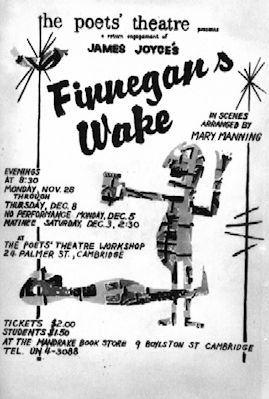
Her move to Boston in 1935 did nothing to slow her momentum. During World War II, she served as drama director at Radcliffe College, where she nurtured new talent and brought a fresh, international sensibility to student theater. Her influence deepened when, in 1950, she became one of the founders of The Poets’ Theatre in Cambridge, Massachusetts. Long before spoken-word venues and literary performance spaces became widespread, Manning helped establish a stage dedicated to poetry as live art. The Poets’ Theatre would become a cultural touchstone, hosting emerging writers and performers who found freedom in its experimental spirit.
Across Ireland and the United States, Manning built, critiqued, organized, adapted, and inspired. She carved out a space for serious film discourse in Ireland, championed meaningful representation, and helped pioneer creative communities that continue to influence artists today. Her career serves as a reminder that shaping film history isn’t only about the movies made—it’s about the voices that challenge, nurture, and imagine what cinema can become.
LUPE VÉLEZ
María Guadalupe “Lupe” Villalobos Vélez (1908–1944) was one of the brightest, boldest, and most influential Mexican performers of Hollywood’s Golden Age—a woman whose talent, charisma, and unmistakable presence helped pave the way for future generations of Latina actresses. Known for her magnetic screen energy and quick-witted comedic timing, Vélez built a career that defied stereotypes while navigating an industry that rarely made space for Mexican women. Her legacy remains vital to understanding both Hollywood history and the long-standing contributions of Latinas in film.
Born in San Luis Potosí, Vélez grew up in a creative environment that encouraged performance, movement, and expression. By her early teens, she was already working as a dancer and performer in Mexican vaudeville, where she developed the vibrant stage persona that would later become her signature. These years sharpened her instincts as a physical comedian and live entertainer—skills that would prove invaluable when she transitioned into the world of motion pictures.
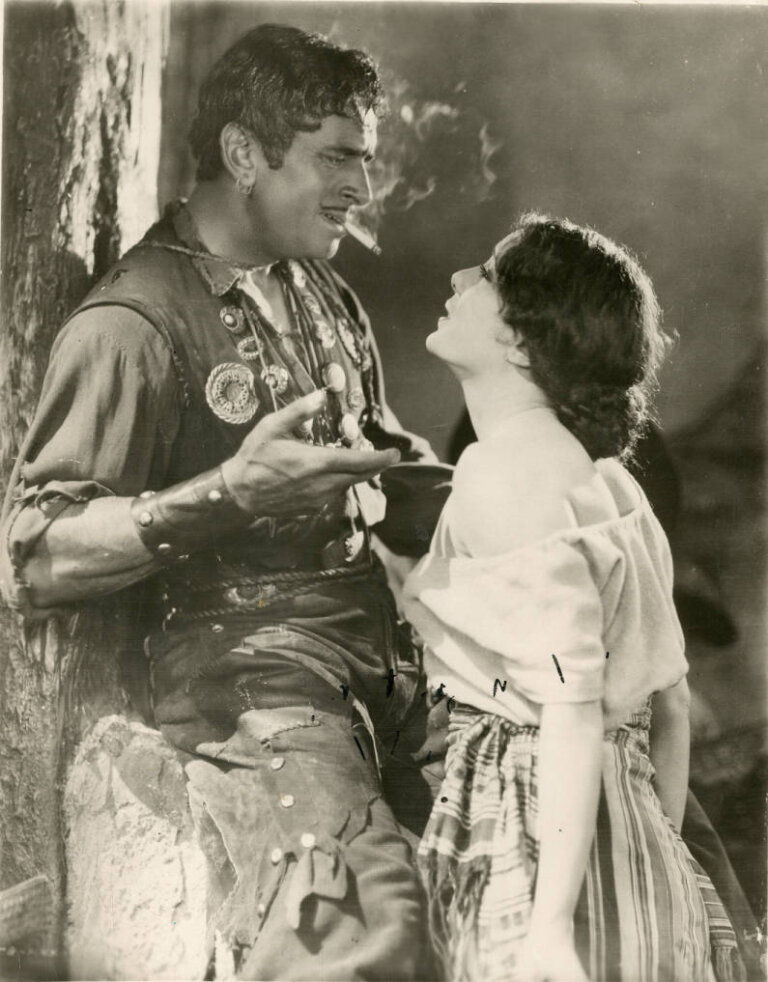
Vélez arrived in the United States during a time when Hollywood was just beginning to shape its star-making machinery. She made her first film appearance in a short in 1927 and quickly drew attention for her beauty, expressive face, and natural confidence on camera. Unlike many performers who struggled when sound arrived, Vélez made the transition seamlessly. Her clear voice, dynamic delivery, and comedic rhythm helped her thrive in the early 1930s, a period when Hollywood was seeking new kinds of stars who could command attention in dialogue-heavy scripts.
Alongside trailblazers like Dolores del Río and Myrtle Gonzalez, Vélez became one of the earliest successful Mexican actresses to gain consistent work and visibility in Hollywood. But unlike del Río—whose roles often leaned toward glamour—Vélez carved out a different niche. She excelled in comedy, particularly the fast-paced, high-energy style of pre-Code and early studio-era pictures. Films such as Hot Pepper (1933), Strictly Dynamite (1934), and Hollywood Party (1934) showcased not only her timing and physicality but also her ability to steal scenes through sheer personality.

And Hollywood took notice. Vélez’s star persona was often referred to as “explosive,” “fiery,” or “dynamite”—labels that reflected both her onscreen vitality and the industry’s limited, racist-coded vocabulary for Latinx performers. Even so, Vélez used these roles to her advantage. She leaned into the physical comedy, delivered razor-sharp punchlines, and proved that Latina actresses were more than capable of leading major studio productions.
Her greatest commercial success came in the 1940s with the Mexican Spitfire series, in which she played Carmelita Fuentes across eight films. While the series often relied on caricature, Vélez’s performance elevated the material. She infused Carmelita with warmth, shrewdness, and charm, creating a character beloved by audiences and profitable for the studios. At a time when Hollywood roles for Latina actresses were severely restricted, Vélez’s ability to headline a long-running series was groundbreaking.
Her life was complex, and the myths surrounding her tragic death often overshadow her accomplishments. But her work—her spark, her voice, her movement, her artistry—lives on. Lupe Vélez was a force, a trailblazer, and a woman who changed what was possible for Latina performers. And her legacy remains essential to the history of women in film.
Vélez’s story serves as a reminder of what determination can do; she was a Mexican woman succeeding in an industry that routinely dismissed, exoticized, or sidelined Latina performers. She used her talent to carve out a space where none existed, became a recognizable name during Hollywood’s most competitive era, and demonstrated that Mexican actresses could be comedic leads, franchise stars, and cultural icons.
NOEL NEILL
Noel Neill (1920–2016) carved out a singular place in American film, television, and pop culture history as the first woman to bring Lois Lane to life on screen. Best known for her portrayal of the fearless reporter in the film serials Superman (1948) and Atom Man vs. Superman (1950), as well as in the beloved television series Adventures of Superman (1953-1958), Neill helped define one of pop culture’s most iconic characters—and in the process became a trailblazer for women in genre storytelling.
Born in Minneapolis, Minnesota, Neill grew up surrounded by the world of news and performance. Her father, journalist David Holland Neill, served as a news editor at the Minneapolis Star Journal, while her mother, Lavere Gorsboth, was a stage dancer. The combination of hard-nosed reporting and theatrical flair would end up shaping the fictional women Neill brought to the screen, especially her no-nonsense portrayal of Lois Lane.

Neill began performing almost as soon as she could walk, singing and dancing in local productions. By her teens, she was already nationally recognized as a photographic model. During World War II, her popularity skyrocketed: while Betty Grable famously held the top spot among American GIs as a pin-up, Neill ranked an impressive number two. Her image became a symbol of optimism and morale during a turbulent moment in American history.
Her success as a model quickly led to opportunities in film. After signing with Paramount Pictures, Neill appeared in dozens of features and short subjects throughout the 1940s. One of her standout early roles was Betty Rogers, a quick-witted teen reporter in producer Sam Katzman’s “Teen Agers” musical comedies. The role allowed Neill to showcase both her comedic timing and her knack for playing smart, intrepid young women, a combination Katzman never forgot.
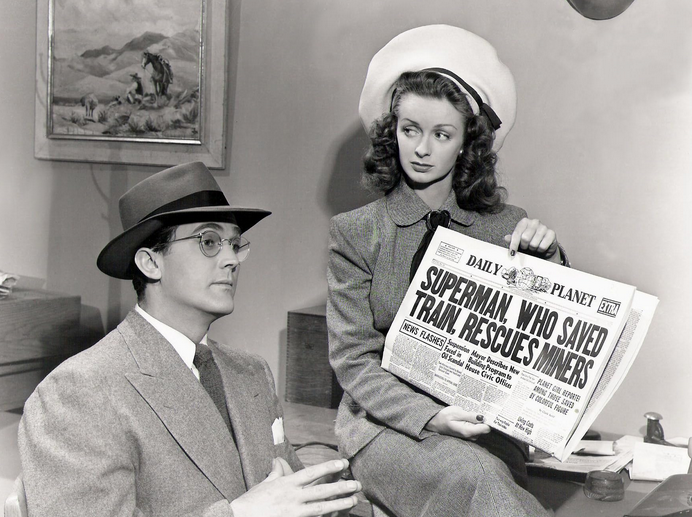
So when Katzman began casting Superman for Columbia Pictures, he immediately thought of Neill. Her portrayal of Lois Lane—sharp, ambitious, and determined—helped solidify the character’s legacy long before superhero adaptations became box-office staples. She reprised the role in Adventures of Superman, appearing in the series from 1953 to 1958 and inspiring a generation of young viewers who saw, perhaps for the first time, a woman who not only belonged in the action but often propelled it. Her portrayal shaped how audiences saw Lois Lane and set the standard for future adaptations across different media.
Though often remembered for her work in the Superman universe, Neill appeared in more than 80 films and television shows over her career. And her connection to the Superman legacy lasted a lifetime. She made cameo appearances in Superman, the TV series Superboy, and Superman Returns, each time serving as a bridge between past and present generations of superhero storytelling.

Long before conversations about representation took center stage, Neill embodied a character who refused to sit on the sidelines. As Lois Lane, she modeled ambition, courage, and professional integrity—traits that were not always afforded to women characters in early Hollywood. Off-screen, she built a long, diverse career in an industry that was rarely kind to actresses seeking longevity. Neill didn’t just play an icon—she became one. And her impact on women in film, television, and pop culture endures, reminding us that sometimes the most powerful heroes don’t need capes at all.
Neill’s story serves as a reminder that not every superhero wears a cape. Neill didn’t just portray an icon—she became one. Long before discussions about representation were common, she embodied a character who refused to stay on the sidelines. As Lois Lane, she exemplified ambition, courage, and professional integrity—traits not always given to women characters in early Hollywood.
JOYCE WIELAND
Joyce Wieland (1931–1998) was one of the most innovative and influential figures in North American experimental filmmaking; she was a mixed-media artist whose bold, boundary-breaking work carved out space for feminist perspectives in a field overwhelmingly dominated by men. Wieland emerged as a pioneering voice of the avant-garde by blending personal politics, national identity, and traditionally feminine craft techniques to redefine what film could be and who it could speak for.
Wieland began her career as a visual artist, working as a painter and draftsman before discovering film as a medium that could merge image, touch, rhythm, and materiality. What set her apart from her contemporaries was her insistence on film as a handmade object. At a time when avant-garde cinema leaned heavily toward structuralist minimalism or macho countercultural rebellion, Wieland introduced a tactile, intimate approach. She stitched, painted, dyed, cut, and even kissed the surface of the filmstrip, bringing a traditionally feminine craft tradition directly into the machinery of cinema. This manual intervention challenged the assumption that film’s photographic “truth” was fixed, instead revealing—playfully and provocatively—the ways images could be reshaped by women’s hands.

Her films, including Reason Over Passion (1969) and Sailboat (1967), were celebrated for their wit, sensuality, and political charge. Though her output was relatively small compared with that of many male avant-garde filmmakers, Wieland’s work received unusually strong attention and support. She became one of the few women of her generation to gain recognition both within independent film circles and the contemporary art world, moving fluidly between screenings, galleries, and museums. This rare crossover success helped elevate women’s voices in experimental cinema during a period when they were frequently marginalized or overlooked.
In 1963, Wieland moved with her husband, fellow avant-garde artist and filmmaker Michael Snow, to New York City, where they lived for a decade. Immersed in the flourishing downtown arts scene, she earned critical acclaim for her bold formal experimentation and feminist sensibility. Yet by the early 1970s, Wieland felt drawn back to Canada, returning to Toronto to continue her work. She later divorced Snow and gradually maintained a quieter public presence, though her influence only continued to grow. In 1982, she was appointed an Officer of the Order of Canada, one of the nation’s highest civilian honors.
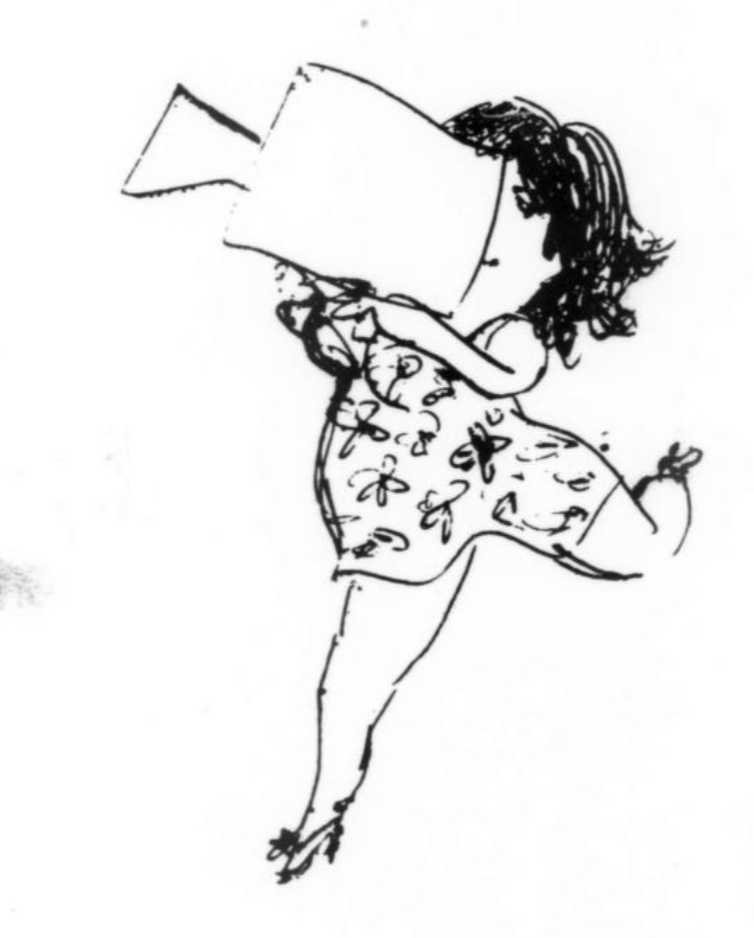
In the years following her death from Alzheimer’s disease in 1998, Wieland’s reputation has only strengthened. Today, she is recognized as a visionary who expanded the language of cinema, insisting on the artistic and political value of women’s creative labor. Her work is now essential to understanding North American feminist art and avant-garde film.

In 2025, her legacy was celebrated through a major year-long retrospective, Joyce Wieland: Heart-On, organized by the Art Gallery of Ontario and the Montreal Museum of Fine Arts. A companion book, Joyce Wieland: Heart On, edited by Anne Grace and Georgiana Uhlyarik and published by Goose Lane Editions, further cemented her place in cultural history. The National Gallery of Canada also presented a vignette exhibition, “Pucker Up! The Lipstick Prints of Joyce Wieland,” highlighting her iconic, intimate approach to materiality.
Wieland remains a vital figure—an artist who insisted that women’s hands, women’s craft, and women’s perspectives belonged at the center of cinematic innovation. Her story serves as a reminder that experimental film has always been shaped not only by men pushing boundaries, but also by women rewriting them entirely.
FATEN AHMED HAMAMA
Often called “The Lady of the Arab Screen,” Faten Ahmed Hamama (1931–2015) stands as one of the most influential and beloved actresses in the history of Egyptian cinema. Her career spanned more than seven decades, and her impact went far beyond performance—she helped reshape the role of women on screen, elevate the artistic standards of Egyptian filmmaking, and inspire generations across the Arab world.
Hamama’s relationship with the camera began remarkably early. Born in Mansoura, Egypt, she made her film debut in 1939 at just seven years old, appearing in Yawm Sa‘id (Happy Day). Her part was small, but her presence was unmistakable, and directors quickly took notice. Throughout the 1940s, she continued to secure roles that grew in complexity, and by the early 1950s, Hamama had become a rising star in a rapidly expanding national film industry. Her talent for emotional nuance—especially her ability to project warmth, intelligence, and moral strength—set her apart from many of her contemporaries.

Her breakthrough as a leading actress coincided with the Golden Age of Egyptian cinema. Films such as Your Day Will Come (1951) earned international attention, and Hamama was nominated for the Cannes Film Festival’s prestigious Prix International—a remarkable achievement for a young actress from the Arab world. She soon became one of Egypt's most in-demand stars, known for choosing roles that highlighted women's struggles, resilience, and aspirations in a changing society.
As her fame expanded, so did her influence. Hamama was a vocal advocate for strong, multidimensional female characters at a time when women’s roles were often limited to archetypes. She rejected scripts that portrayed women as weak or superficial, insisting on stories that portrayed them as thinkers, leaders, and complex human beings. Her commitment to portraying women with dignity and depth helped redefine the standards of Egyptian popular cinema and influenced how female characters were written for decades.

By the mid-20th century, Hamama’s reputation had grown to iconic status. Audiences flocked to see her films, and critics widely considered her one of the greatest Arab actresses of all time. In 1996, her legacy was formally cemented when nine of her films were included in the Cairo International Film Festival’s Top 100 Egyptian Films of all time—a staggering accomplishment that underscored her unparalleled impact on the region’s cultural history.

After a seven-year hiatus from acting, Hamama made a celebrated return in 2000 with the television series Wageh El Amar (Face of the Moon), one of the most anticipated productions of the decade. That same year, she was honored as “Star of the Century” by the Egyptian Writers and Critics organization, a title that reflected not only her extraordinary body of work but also her cultural influence and the admiration she inspired across generations.
Throughout her life, Hamama was more than a film star—she was a creative force who helped transform Egyptian cinema into a respected, internationally recognized art form. Her dedication to elevating women’s status on screen, her refusal to conform to narrow stereotypes, and her unwavering artistic integrity. Her story serves as a reminder of what happens when talent, conviction, and vision align to change an entire industry.
JOAN MICKLIN SILVER
Joan Micklin Silver (1935–2020) was a groundbreaking American filmmaker, playwright, and screenwriter whose sensitive, character-driven storytelling helped reshape independent cinema. Best known for her acclaimed debut film Hester Street (1975) and the beloved romantic comedy Crossing Delancey (1988), Silver carved out a space for women’s voices in a time when opportunities for female directors were still frustratingly rare.
Born in Omaha, Nebraska, Silver grew up steeped in stories. Her father owned a hardware store, and her mother was a teacher, both of whom nurtured her love of the arts from an early age. After studying English at Sarah Lawrence College, she began her career writing educational films—a path that sharpened her perspective on narrative, character, and the human experiences that would later define her features.
When Silver set her sights on directing in the late 1960s and early 1970s, she encountered the barrier that almost every woman filmmaker faced in that era: the studios simply weren’t interested. Hollywood executives dismissed her work before they read it, insisting that women couldn’t (or shouldn’t) direct theatrical films. Instead of backing down, Silver did what so many pioneering women in film history have had to do—she made her own way.

Her breakthrough came with Hester Street, a deeply personal adaptation of Abraham Cahan’s novella Yekl. Shot on a budget raised largely outside the studio system, the film explored Jewish immigrant life on New York’s Lower East Side with an honesty and tenderness that struck audiences and critics alike. Silver’s commitment to authenticity was unparalleled: she filmed in black and white, centered Yiddish dialogue, and focused her storytelling on the emotional interiority of her characters—especially women navigating identity, marriage, and reinvention.
Hester Street became an unexpected indie success. Produced on a shoestring budget and shot in just 34 days, Silver directed actress Carol Kane to an Academy Award—the first time in 45 years a woman director had guided a Best Actress nominee and secured her own reputation as a filmmaker whose work was both literary and deeply human. But more importantly, it proved that women directors could build meaningful, financially successful films outside the constraints of the studio system.
Silver continued to champion women-centered narratives throughout her career, but her best-known mainstream success came with Crossing Delancey (1988). The film—warm, romantic, and proudly rooted in Jewish New York—showcased Silver’s signature strengths: humor, cultural specificity, and a deep empathy for women who feel caught between expectations and desire. It remains one of the most beloved romantic comedies of the 1980s, thanks in large part to Silver’s ability to craft stories where everyday people feel extraordinary.
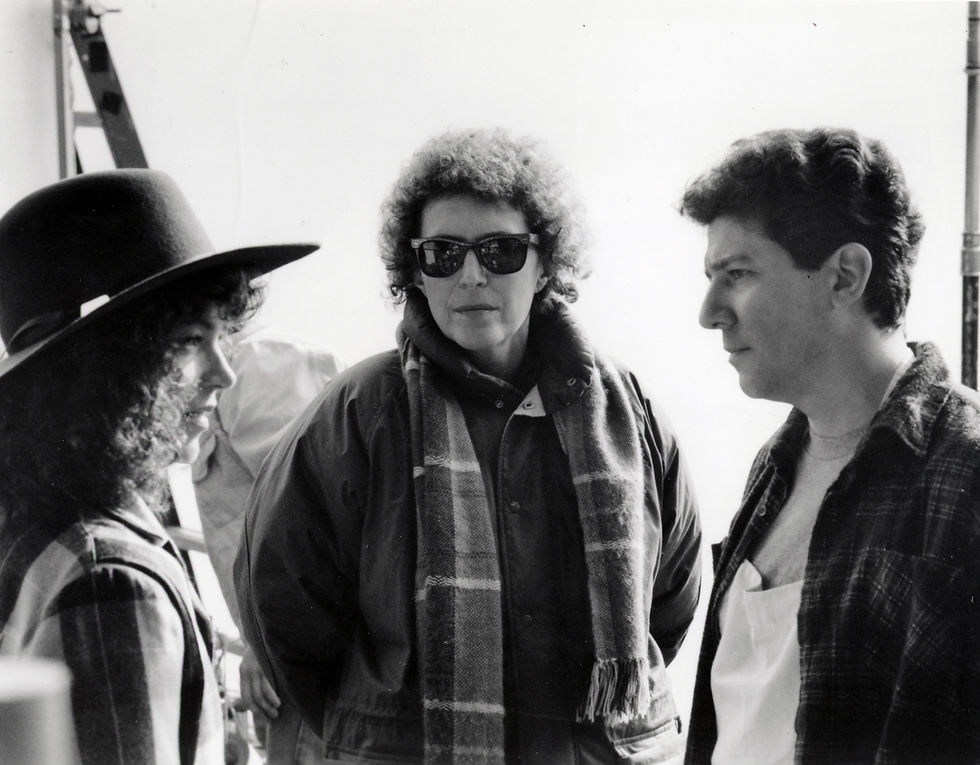
Across her career, Silver directed features, television films, and stage plays, always returning to themes of identity, community, and women finding their own voice. She worked at a time when women directors were far too often sidelined, but she never stopped fighting for her place—or for the nuanced, heartfelt stories she believed audiences deserved.
Silver’s story serves as a reminder of what women filmmakers can accomplish when they insist on being heard. She broke through barriers that weren’t meant to budge, opened the door for future women in independent film, and left behind a body of work defined by depth, cultural richness, and profound emotional truth. Her films continue to resonate—not only as beautifully crafted stories but as milestones in the history of American women in cinema.
MOLLIE GREGORY
Mollie Gregory (1937–2022) was an American author, screenwriter, researcher, and tireless advocate for women in the film and television industry. Throughout her long career, she blended storytelling with activism, using her writing to champion underrepresented voices and her industry leadership to push for real, lasting change. While she worked across genres and mediums, Gregory’s legacy shines brightest in the doors she helped open—and the histories she made sure would never be forgotten.
Gregory began her career in Hollywood at a time when women were rarely invited into decision-making rooms. Like so many women in the industry, she quickly realized that talent alone wasn’t enough to navigate a system designed to keep women out. So she became something Hollywood rarely expects: a creator and a changemaker.
Her early screenwriting included the independent Western Buffalo Rider (1976), a project that reflected her lifelong interest in offbeat stories and overlooked histories. But writing for the screen was only one facet of her career. Gregory’s true impact emerged through her dogged research and powerful nonfiction writing. She was endlessly curious about the hidden labor that makes Hollywood run—and even more committed to making sure the people behind that labor were seen, heard, and credited.

In 1987, Gregory published Legacy of the Hollywood Blacklist, an important early examination of one of the most painful chapters in American film and political history. Through oral histories and meticulous research, she preserved the voices of artists whose careers and lives were derailed by the anti-communist hysteria of the 1940s and 1950s. Her work helped frame the blacklist not just as a historical event, but as a human one—something that continues to shape Hollywood’s creative landscape.
But Gregory didn’t just write about change. She rolled up her sleeves and helped build it.

During her tenure as Women In Film (WIF) Board President from 1981 to 1982, she strengthened the organization’s advocacy and outreach at a pivotal moment for women in Hollywood. And in 1984, alongside Diane Asselin and Phylis Geller, she co-created one of WIF’s most influential programs: the WIF Film Finishing Fund. The Fund awarded cash grants and in-kind post-production services to women-led projects, ensuring that innovative, independent films could actually be completed—and seen. Since its inception, it has supported hundreds of filmmakers whose work might otherwise have remained unfinished. This program alone cements Gregory’s place in Hollywood history; it changed careers, launched new voices, and challenged the industry’s insistence on gatekeeping.
Her commitment to uplifting women continued with her 2003 book, Women Who Run the Show: How a Brilliant and Creative New Generation of Women Stormed Hollywood, a vibrant, behind-the-scenes history of WIF and the women transforming the business from the inside out. Gregory understood that representation in media starts with representation in leadership, and she used her writing to spotlight executives, producers, and creators who had been overlooked for far too long.

Still, one of her most celebrated works came later in life. Her 2015 book Stuntwomen: The Untold Hollywood Story, and the 2020 documentary it inspired, brought long-overdue attention to the women who risk their lives to bring action cinema to life. Gregory spent years interviewing stunt performers, advocating for their recognition, and documenting their battles for safety, credit, and equality. It was the first full history of stuntwomen—from the silent era to modern day—and is still one of the most definitive works on stunt performance ever written.
Gregory’s story serves as a reminder that championing women in film requires both storytelling and structural change. She did both—brilliantly. Through her books, her advocacy, and her leadership, she helped rewrite Hollywood history while ensuring future generations of women could claim their space within it.
What’s Coming Next: Part II Launches Next Friday
Just because March is over doesn’t mean the celebration is over. The remaining 16 honorees for this year’s Women in Film History project will be shared every Friday throughout the spring and summer.
If you’d like to follow along in real time—and catch new reels, carousels, and behind-the-scenes research—be sure to follow me on Instagram at @writer_alliey_michelle. I’ll be posting weekly updates, and I’d love to have you along for the rest of the project.
Explore the Full 2017–2026 Archive
Did you know this project now covers nine years of women in film history? To keep everything organized and accessible, I maintain a growing Google Sheets document that lists every single woman I’ve profiled since 2017. The spreadsheet includes:
Each woman’s name
Her profession and decade
Quick notes on her significance
A searchable layout to help you explore the archive
Whether you’re a student, researcher, film fan, or just simply curious, I hope it’s a helpful resource—plus, it’s free to use.
Thanks for reading, supporting, and sharing this project. Every like, comment, share, and DM really does help (again, algorithms), and reminds me why this work matters. Even on the difficult days, the stories of these women—and your participation—keep me going every year.
As I move into the next phase of the project, I’d really love to hear from you: Which women in film history inspire you? Who would you like to see featured next?
Drop your thoughts in the comments below, share this post with a film-loving friend, and don’t forget to follow along on Instagram for new profiles every Friday.
Here’s to the next 16 stories, and to continuing to honor women in film history all year long.


Comments