
Celebrating Women in Film History: A Look Back at the Profiled Women of 2025
Updated: Mar 3
A look back at the remarkable women in film history highlighted for Women’s History Month 2025.
March has flown by, and with it, another Women’s History Month comes to a close. Since 2017, I’ve dedicated March to honoring trailblazing women in film history—some well-known, others long overlooked, but all instrumental in shaping the industry. This year, in addition to writing and cataloging their biographies, I took on the challenge of creating reels and carousel posts to bring their stories to life.
But you know what they say: "The road to hell is paved with good intentions." While I didn’t complete all 31 profiles as planned, I am proud of the twenty-three I did share. Quality over quantity, right?
To me, this project has always been about more than just names and dates—it’s about recognizing the impact these women had on film, television, and the whole entertainment industry. From innovative directors and costume designers to screenwriters and actors who have redefined storytelling, these women have shaped the medium we love today.
While I may not have reached my original goal, I want to celebrate the incredible stories that made it to the feed this year. If you missed any, here’s a look at the twenty-three profiles featured in 2025’s Women in Film History series:
Carmen "Carmencita" Dauset Moreno (1868-1910) One of the first women captured on film in the 1890s.
Carmen Dauset Moreno, better known by her stage name Carmencita, was a Spanish-style dancer in American pre-vaudeville variety and music-hall ballet.
Carmencita was born in Almería, Spain, in 1868. She began taking dance lessons in Málaga and made her professional debut at Málaga’s Cervantes Theatre in 1880. She toured throughout Spain in 1882 before heading to Paris and Portugal. During the 1889 Exposition Universelle in Paris, she caught the attention of agent Bolossy Kiralfy, who brought her to the United States. Carmencita debuted in New York on August 17, 1889, in the ballet "Antiope."
After parting ways with Kiralfy in early 1890, she rose to fame under the management of John Koster and Albert Bial, performing at their 23rd Street Concert Hall beginning on February 10, 1890. Over the next few years, she toured major cities and performed at Koster & Bial’s new Music Hall in late 1894. She later returned to Europe, appearing at the Palace Theatre in London in February 1895 and at the Théâtre des Nouveautés in Paris.

At the height of her popularity, Carmencita inspired poetry and prose. Today, she is noted for having had her portrait painted by notable artists such as John Singer Sargent, William Merritt Chase, and James Carroll Beckwith, and for her role in an eponymous short film, one of many early instances of filmed theater.
In 1894, William K.L. Dickson, the Scottish inventor credited with the motion picture camera, under the employ of Thomas Edison, directed and produced the short, black-and-white silent documentary film Carmencita.
According to film historians, Carmencita was the first woman to appear in a modern motion picture made for commercial release and may have been the first to appear in one in the United States. In the film, she is recorded going through a routine she had been performing at Koster and Bial’s Music Hall in New York City since February 1890.
Marion Fairfax (1875-1970) A pioneering screenwriter and playwright from Hollywood's early days.
Marion Fairfax started her career as a stage actress, a common pathway for many women of her era. By 1901, she was performing on Broadway; shortly thereafter, her plays were also being shown there. Before transitioning to film, she became well-known as one of the top playwrights in the United States, creating Broadway hits such as The Builders (1907), The Chaperon (1908), The Talker (1912), and A Modern Girl (1914).

In 1915, Fairfax relocated from New York to California. The Jesse L. Lasky Feature Play Co. hired her to collaborate with the renowned silent-era filmmaker William C. DeMille, who was known for adapting Broadway plays into silent films. Fairfax found success at Lasky due to her strong understanding of drama from both a writer’s and a performer’s perspective.
In the late 1910s, Fairfax started her production career with Marshall Neilan at Paramount Pictures. There, she wrote scripts for several successful films, including The Immigrant (1915), The Clown (1916), The Sowers (1916), The Honor of His House (1918), and The Valley of the Giants (1919). After finding success with Neilan, she produced and co-wrote films like Freckles (1917), Don’t Ever Marry (1920), Go and Get It (1920), and The Lotus Eater (1921).
After spending her early career with Neilan, Fairfax established her own production company in 1921. By this time, she had gained recognition as a highly successful playwright and screenwriter. Women like Fairfax, Lois Weber, Frances Marion, Anita Loos, and Mary Pickford proved that women could thrive in the film industry. In an interview with Exhibitors Herald, Fairfax said about developing her own production company:
"The formation of Marion Fairfax Productions is not the result of a sudden decision or and overnight idea. It is the realization of a plan that I have studied and worked out for over a year. I believe there is a place for the combination of literary effort and motion picture presentation just as there is a place for the combination of literary achievement and stage presentation."

With a new production company at her disposal, Fairfax began working on her first independent feature. The Lying Truth (1922) starred Marjorie Daw, J. Pat O’Malley, Noah Beery, Sr., and her husband, actor Tully Marshall.
Fairfax’s success with her own production company helped her gain experience and credibility within the film industry. In September 1923, she joined the writing team at Associated First National Pictures, Inc. Hiring Fairfax gave First National a popular writer known for original stories and adaptations of popular plays. After two years, she left First National’s writing team to return to production. At that time, Fairfax was one of the top playwrights in New York theater and also worked as a scenario writer, editor, and production supervisor for teleplays.
After leaving First National Picture Inc., Fairfax partnered with silent-era producer Sam E. Rork to reduce production costs for two collaborating filmmakers. They wanted to share technical staff by scheduling their productions together. While one producer worked on a film and prepared for their next project, the other could utilize the designated "shooting staff." This way, both independent producers could maintain a consistent technical team, which would be difficult to afford individually. Fairfax’s last credited screenplay was for the romantic film The Blonde Saint (1926), directed by Maurice Tourneur and co-produced with Rork.
After falling ill, she stepped away from filmmaking in the late 1920s but continued to write for magazines. Marion Fairfax died on October 2, 1970, and was buried next to her husband at Hollywood Forever Cemetery in Hollywood, California.
Barbara Karinska (1886-1983) A legendary costume designer known for her work in classic Hollywood films.
Born Varvara Andryevna Zmoudsky in Kharkiv, Russian Empire (now Ukraine), Barbara Karinska was the daughter of a wealthy wholesaler of cotton goods and a philanthropist. As a child, she learned Victorian embroidery from her German and Swiss governesses. This skill would spark her career path.
Following the Bolshevik Revolution of October 1917, Karinska and her family spent the years of the Civil War moving between Kharkiv and Crimea. With the fall of Crimea to the Red forces in 1920, Karinska opened a Tea Salon that became the meeting place of Moscow artists, intellectuals, and government officials every afternoon at five o’clock. In the same complex, she founded a haute couture and a millinery atelier to dress the wives of the Soviet elite. She also opened an antique store and an embroidery school, where she taught needlework to the working class. However, by 1924, she started making plans to escape the RSFSR. Karinska sewed the last of the family jewels into her daughter’s clothes and hid foreign banknotes in her nephew’s schoolbooks before fleeing Moscow via Berlin and resettling in Paris.
After two years of living in Paris, Karinska’s wealth had run out, and she again turned to her sewing and embroidery skills for work. Her first major project was embroidering costumes for Alexandre Volkoff’s historical drama The Loves of Casanova (1927). The influx of Russian artists who had fled Russia during the Bolshevik Revolution turned to Karinska to create more costumes, including for the newly formed Ballet Russe de Monte Carlo in Paris, where she met choreographer George Balanchine.
In the late 1930s, Karinska worked in London and New York, building up her resume and reputation for her heavily detailed costumes. As France and England declared war on Germany, Karinska finally emigrated and settled in New York City, where she spent the rest of her career. She collaborated often with Balanchine and the New York City Ballet, designing and executing costumes for 75 ballets with him.

Karinska revolutionized costumes for ballet dancers in the late 1940s with her innovative designs. One of her most notable creations, the "powder puff" tutu, also known as the Balanchine-Karinska or American tutu, debuted in the ballet Symphony in C in 1950. Since then, it has become a standard piece in ballet companies worldwide.
The powder puff tutu features layers of lightweight tulle that create a fluffy, voluminous silhouette. This design enables graceful movement while preserving the traditional aesthetics of ballet. The tutu expertly combines form, function, and artistry, enhancing the dancer’s lines and providing greater freedom of movement on stage.

In 1948, Karinska and co-designer Dorothy Jeakins won the Academy Award for Best Costume Design in the newly established Color Costume Design category for their work in Joan of Arc, starring Ingrid Bergman. This marked the first year that the Academy recognized color costume design. Karinska received a second Oscar nomination in 1952 for her contributions to the Samuel Goldwyn musical Hans Christian Andersen, starring Danny Kaye. In 1962, she became the first costume designer to receive the Capezio Dance Award, which recognizes costumes that provide "visual beauty for the spectator and complete delight for the dancer."
In 1983, Karinska’s longtime collaborator, Balanchine, died in April, and she passed away on 18 October, two weeks after her 97th birthday.
Zora Neale Hurston (1891-1960) An acclaimed writer, filmmaker, and anthropologist who documented Black American life in the 20th century.
Born in Notasulga, Alabama, on January 7, 1891, Zora Neale Hurston spent most of her childhood in Eatonville, Florida. Eatonville was one of the first self-governing, all-Black municipalities in the United States, and her father served as its mayor in 1897. Hurston always considered Eatonville her hometown and often used it in her stories. It provided a community where African Americans could live freely and independently without interference from white society.

In the late 1910s, Hurston left Florida to further her education. She earned an associate degree from Howard University, a historically Black college and university (HBCU), in 1920. Hurston also contributed to the publication of the school’s newspaper’s inaugural issue in 1924. In 1925, Annie Nathan Meyer, a trustee of Barnard College at Columbia University, offered Hurston a scholarship. She became the only Black student at this women’s college.
Hurston was an anthropology student who worked with Franz Boas, an anthropologist at Columbia University. She studied ethnography, which means she researched cultures by living among the people she studied. Hurston focused on the Caribbean and the American South, learning about local customs and practices to support her research.
Before documentary filmmaking had a name, Hurston was out in the field, camera in hand, capturing the stories and traditions of Black life in the American South. Recognizing the power of film to preserve oral traditions, she filmed some of the earliest footage of Black Southern culture in 1927 and 1929, documenting sacred dances, work songs, and community traditions. Her short film, Fieldwork Footage (1929), stands as one of the earliest ethnographic films about Black life.
Hurston wrote about issues affecting the Black community and played a key role in the Harlem Renaissance. She published short satirical pieces that reflected the African American experience and addressed racial division in collections like The New Negro and Fire!! After moving back to Florida, Hurston wrote and published her literary anthology on African American folklore, Mules and Men (1935), along with her first three novels: Jonah’s Gourd Vine (1934), Their Eyes Were Watching God (1937), and Moses, Man of the Mountain (1939). She also wrote Tell My Horse: Voodoo and Life in Haiti and Jamaica (1938), documenting her research on rituals in Jamaica and Haiti.

Hurston’s works focused on the African American experience and her personal struggles as a Black woman. For decades, her novels were largely overlooked by the literary world. However, in 1975, fifteen years after Hurston’s death, interest in her work was renewed when author Alice Walker published an article titled "In Search of Zora Neale Hurston" in Ms. magazine. Walker and fellow Hurston scholar Charlotte D. Hunt found an unmarked grave in 1997 in the general area where Hurston had been buried; they decided to mark it as hers. Walker commissioned a gray marker inscribed: "ZORA NEALE HURSTON | A GENIUS OF THE SOUTH | NOVELIST FOLKLORIST | ANTHROPOLOGIST | 1901–1960."
In 2001, Hurston’s manuscript Every Tongue Got to Confess, a collection of folktales she gathered in the 1920s, was published after being discovered in the Smithsonian archives. Additionally, her nonfiction book Barracoon: The Story of the Last "Black Cargo" was published posthumously in 2018. This book tells the story of Cudjoe Lewis (Kossola), one of the last survivors of enslaved people brought illegally to the United States in 1860.
Adela Rogers St. Johns (1894-1988) A trailblazing journalist and screenwriter who chronicled Hollywood's golden age.
In an era when women were rarely in newsrooms, Adela Rogers St. Johns was making her own headlines. She began her career in the 1910s as a crime reporter, covering high-profile trials and scandals, before moving into politics, sports, high society, and Hollywood gossip, showcasing her sharp writing and fearless approach.
In the 1920s and 1930s, St. Johns was the star reporter for Photoplay magazine, interviewing Hollywood legends like Clara Bow, Rudolph Valentino, Joan Crawford, and Clark Gable. Her intimate profiles and celebrity interviews contributed to the magazine’s success and helped shape the era’s celebrity culture.
St. Johns continued her career writing for publications like Photoplay, Cosmopolitan, and The Saturday Evening Post before moving to Hollywood. There, she penned screenplays for films such as What Price Hollywood? (1932), a precursor to A Star Is Born, and scripts for studios like Warner Bros. and MGM.
Throughout her impressive 7-decade career, St. Johns reported on key events such as the 1927 Dempsey-Tunney boxing match, the Great Depression, the 1935 trial of Bruno Hauptmann for the Lindbergh kidnapping, the assassination of Senator Huey Long, King Edward VIII’s abdication in 1936, and the 1940 Democratic National Convention.

In 1948, St. Johns transitioned from her newspaper career to write ten novels and teach journalism at UCLA. She later became a television commentator and memoirist, gaining fame as a guest on The Tonight Show and The Merv Griffin Show.
St. Johns retired from the public eye in the early 1980s, making her final public appearance as a witness in Warren Beatty’s Reds (1981) at 87 years old. Adela Rogers St. Johns spent her later years in Arroyo Grande, California, and passed away in 1988.
Sylvia Moberly-Holland (1900-1974) One of Disney's first female storyboard artists who worked on Fantasia (1940) and Bambi (1942).
Sylvia Moberly-Holland was born in England and studied architecture at the Architectural Association School in London from 1919 to 1925. She was the first woman to join the Royal Institute of British Architects. In the 1930s, she immigrated to North America with her family, but her architectural degree wasn’t transferable, so she shifted her career toward illustration. Inspired after watching Snow White and the Seven Dwarfs (1937) in theaters, she applied to Walt Disney Productions.
The studio recognized her artistic skills and hired her, making her the second woman ever hired as a storyboard artist. By 1938, she was leading the concept team for the ’Pastoral Symphony’ section of Fantasia (1940). She had a great talent for color, composition, and movement. She brought Greek mythology to life by creating scenes featuring centaurs, Cupids, and lush landscapes. Although the final version of her work was changed, her contributions significantly impacted the film’s artistic style.

As one of the few women in Disney’s male-dominated Story Department, she proved that women could be creative leaders in animation. She worked on early storyboards for Bambi (1942) and helped pave the way for future female Disney artists like Mary Blair and Retta Scott. Around this same time, Moberly-Holland was developing storyboards on an early version of The Little Mermaid.
By September 1941, Moberly-Holland had been laid off, but she returned to Disney in August 1942 to develop storyboards on Victory Through Air Power (1943). By early 1945, the Disney studios sought to salvage abandoned musical segments and combine them into the 1946 package film Make Mine Music. During production, Holland wrote story treatments on the Greek muses, which later became the "Two Silhouettes" sequence. Moberly-Holland was laid off from Walt Disney Productions for a second time in 1946 and briefly worked for Metro-Goldwyn-Mayer. She then became a children’s illustrator for Whitman Publishing, and also worked as a greetings card designer for MacMillan’s Readers and Chryston Limited Edition.

Throughout the 1960s and early 1970s, Moberly-Holland became a pioneering Balinese breeder, developing a new breed of Siamese cats, bringing her newfound international attention. On Easter Sunday, 1974, Moberly-Holland passed away in her Tarzana home.
Although Disney animation was slow to recognize female leadership, Sylvia Moberly-Holland’s imaginative storytelling and strong artistic vision helped shape the golden age of animation. Her legacy lives on as her work still inspires animators and illustrators around the world today.
Irene Lentz (1901-1962) A fashion designer-turned-costume designer who dressed Hollywood's biggest stars.
Irene Lentz—known professionally and iconically as Irene—was one of the defining fashion and costume designers of Hollywood’s Golden Age. Blending couture craftsmanship with cinematic storytelling, she helped shape what glamour looked like both on-screen and off, leaving a legacy that endures in film history, costume design, and high fashion.
Irene’s career began far from movie sets, inside an upscale Beverly Hills boutique where she designed custom clothing for Los Angeles’ most fashionable women. Her impeccable tailoring and eye for luxury quickly attracted actresses, who were drawn to her understated elegance and soft, feminine silhouettes, becoming regular clients. Stars like Dolores del Río, Carole Lombard, Loretta Young, Hedy Lamarr, Claudette Colbert, Joan Bennett, and Ingrid Bergman wore her pieces long before the studios took notice.
However, it wasn’t long before Metro-Goldwyn-Mayer (MGM), impressed by her ability to elevate a woman’s natural beauty through fabric and form, brought her into the studio system. By 1943, Irene had risen to the coveted position of MGM’s leading costume supervisor, a remarkable achievement for a woman working behind the scenes in a male-dominated industry. Her arrival at MGM marked a shift in how glamour was presented on film.
Example of Irene's "souffle creations": Ginger Rogers in Shall We Dance (1937), Loretta Young in Eternally Yours (1939), Hedy Lamar in The Heavenly Body (1943), and Lucille Ball in Easy to Wed (1946).
Irene’s trademark look—nicknamed "soufflé creations"—captured the ethereal glamour of mid-century Hollywood. These designs featured soft fabrics, airy layers, and luxurious draping that moved beautifully under studio lights. Her gowns didn’t just clothe actresses—they framed them, enhancing the drama and emotion of each scene.

Her innovative artistry is perhaps best remembered through her collaboration with Lana Turner in The Postman Always Rings Twice (1946). Irene’s sleek, modern, almost sculptural wardrobe for Turner helped cement the film’s status as a noir classic and transformed Turner into one of the decade’s most imitated fashion icons. The white halter dress alone became a blueprint for a new kind of cinematic allure: minimalist, dangerous, unforgettable.
Throughout the 1930s, 40s, and early 50s, Irene worked with many of the era’s most influential actresses. Her costumes for Ginger Rogers in Shall We Dance (1937) showcased her ability to pair fashion with movement, creating gowns that complemented the film’s monochromatic palette and highlighted Rogers’ athletic grace. Her designs were not simply costumes—they were integral to the visual language of each film.

In 1960, long after Irene had stepped away from Hollywood to relaunch her independent fashion label, actress Doris Day personally asked her to return to design the wardrobe for Lover Come Back (1961). These polished, sophisticated costumes were among the final works of Irene’s remarkable career.
Irene’s contributions did not go unnoticed. She earned two Academy Award nominations for Best Costume Design: one for Black-and-White Costume Design for B.F.’s Daughter (1948) and one for Color Costume Design for Midnight Lace (1960). Her ability to navigate both black-and-white and color cinema with equal artistry demonstrated her rare versatility and technical mastery.
Though Irene stepped away from the studio system in the 1950s, her impact remained. In 2005, she was posthumously inducted into the Costume Designers Guild’s Anne Cole Hall of Fame, solidifying her place among the greats.
Today, Irene Lentz is remembered as a pioneering woman whose visionary designs shaped Hollywood glamour and expanded opportunities for women in film craftsmanship. Her work continues to inspire costumers, fashion designers, and film historians—proof that true artistry never fades.
Dolores del Río (1904-1983) The first major Latina Hollywood star who paved the way for Latinx representation in film.
Born María de los Dolores Asúnsolo y López-Negrete in 1904 in Durango, Mexico, Dolores del Río—affectionately called Lolita—would become one of the most influential actresses of the 20th century. Her childhood was shaped by dramatic upheaval: though she descended from an aristocratic Basque-Spanish family, the Mexican Revolution uprooted their privileged life. As revolutionary forces led by Pancho Villa targeted wealthy families, Dolores and her mother fled to Mexico City disguised as peasants. This turbulent chapter became the unlikely beginning of one of cinema’s most extraordinary careers.
In Mexico City, a teenage Dolores discovered her love of dance. Her graceful performances at charity events attracted admiration, including that of Jaime Martínez del Río, a wealthy aristocrat and aspiring writer. The two married in 1921 when she was just sixteen. Their extended European honeymoon exposed Dolores to global arts and culture, allowing her to continue dancing abroad and planting the seeds of an international career.

In 1925, Dolores’s life changed course when she met American filmmaker Edwin Carewe, who saw her dance during a visit to Mexico City. Enchanted by her poise and beauty, Carewe believed she could become Hollywood’s next great star—and the female counterpart to Rudolph Valentino. He emphasized her Spanish-European ancestry to combat the deep racial prejudices against Mexican actors in Hollywood. Encouraged by the promise of opportunity, Dolores and her husband moved to Los Angeles that same year, and she soon made her film debut in Joanna (1925).
Once free from the control of both Carewe and her husband, del Río’s career flourished. By the late 1920s, she had become one of Hollywood’s most admired stars, leading films such as What Price Glory? (1926), Resurrection (1927), Ramona (1928), and Evangeline (1929). Her expressive acting made her a standout of the silent era.
Unlike many stars whose careers floundered when Hollywood transitioned to sound, Dolores thrived. Her eloquent voice and elegant presence elevated films like Flying Down to Rio (1933), where she danced alongside a young Fred Astaire and Ginger Rogers. During her contract with Warner Bros. in the mid-1930s, she headlined films such as Madame Du Barry (1934), In Caliente (1935), and I Live for Love (1935), resisting the industry’s attempts to typecast her in stereotypical Latina roles.
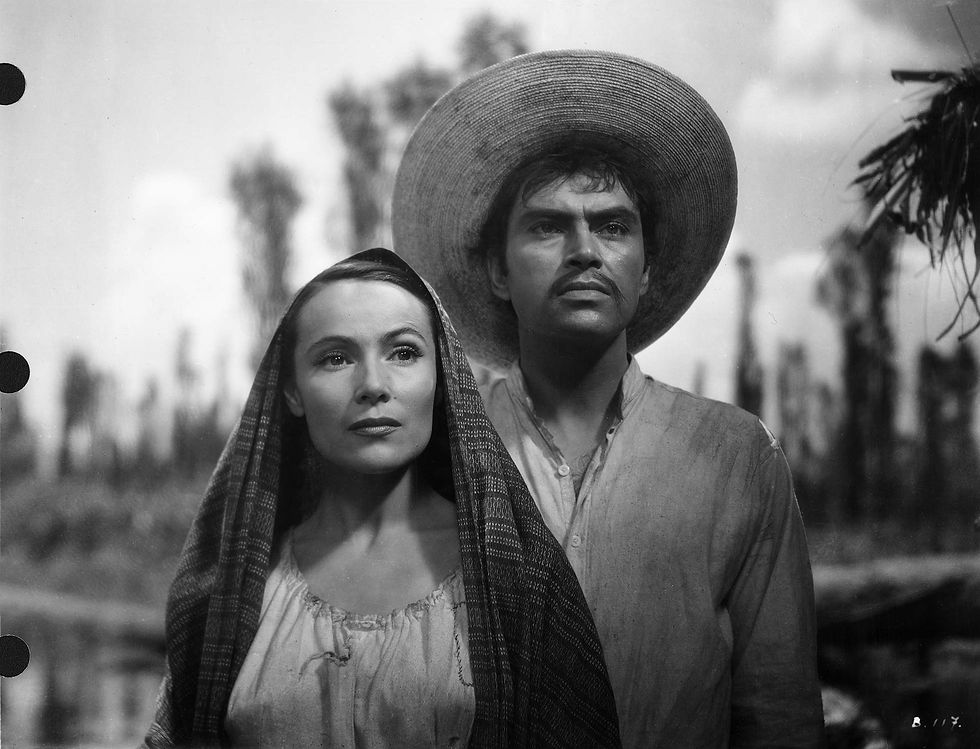
As Hollywood’s biases grew more restrictive, del Río returned to Mexico in the late 1930s and soon became a central figure in the Golden Age of Mexican Cinema. Her performances in Flor Silvestre (1943) and María Candelaria (1944)—the latter winning Mexico’s first award at the Cannes Film Festival—cemented her as one of the era’s most powerful dramatic actresses. She became a global ambassador for Mexican culture and talent, proving that Hollywood’s limitations did not define her artistry.
Beyond acting, Dolores del Río devoted her life to cultural preservation and artistic advancement. She co-founded the Society for the Protection of the Artistic Treasures of Mexico, helped launch the Acapulco International Film Review, and played a vital role in creating the Cervantino Cultural Festival, now one of Latin America’s most important arts festivals.

Del Río was also a fierce advocate for actors’ rights. In 1970, she co-founded Rosa Mexicano, a childcare network for members of the Mexican Actors’ Guild. She fundraised tirelessly, learned early childhood education methods, and served as the organization’s president until 1981. After her death, the daycare center was renamed the Estancia Infantil Dolores del Río in her honor.
Janice Loeb (1913-1996) A pioneer of documentary film and the first woman nominated for an Academy Award for Best Documentary Feature.
Janice Loeb was a groundbreaking filmmaker whose work helped redefine American documentary film in the mid-20th century. Best known for her poetic, observational style and her commitment to capturing real human experiences, she became the first woman ever nominated for an Academy Award in the Best Documentary Feature category—a milestone that cemented her place in film history. Her career, though relatively brief, left a profound impact on the evolution of documentary storytelling and opened doors for generations of women behind the camera.

Born in 1913, Loeb’s artistic journey began long before she ever picked up a camera. She studied painting and art history at Vassar College and later at Harvard University, developing a strong aesthetic sensibility and an eye for composition. Her early adulthood took her to the cultural capitals of Paris and London, where she immersed herself in the modern art movements flourishing in Europe.
The outbreak of World War II in 1939 forced Loeb to leave Europe and return to the United States. She settled in New York City, a vibrant artistic hub that would become the foundation for her filmmaking career. It was there, amidst the city’s energy and creative ferment, that she began to explore film as a new artistic medium—one that allowed her to merge her painterly eye with real-world storytelling.
In New York, Loeb met renowned street photographer Helen Levitt, a meeting that would shape both of their careers. The two women quickly formed a close creative partnership grounded in mutual respect and shared artistic curiosity. Levitt later recalled:
“She had a highly developed eye… Looking at the world through her perspective, I learned so much.”
Together, Loeb and Levitt began experimenting with what would later be known as “street film”—a raw, observational style of nonfiction filmmaking that captured the rhythms, characters, and textures of everyday urban life. Their work rejected the heavily narrated, structured format of traditional documentaries, instead embracing spontaneity, humanity, and authenticity.

Loeb’s most celebrated work came in the late 1940s, when she, Levitt, and editor Sidney Meyers collaborated on The Quiet One (1948). This poignant, character-driven documentary follows a young boy in Harlem and explores themes of trauma, resilience, and social inequity. Its sensitivity, visual innovation, and narrative depth set it apart from most documentary films of its time.
In 1949, Loeb became the first woman ever nominated for an Academy Award for Best Documentary Feature for The Quiet One. The following year, she received a second Oscar nomination for Best Writing, Story, and Screenplay, an honor she shared with Levitt and Meyers. These nominations marked a watershed moment: Loeb shattered long-standing industry barriers and proved that women could excel at the highest levels of directing, cinematography, and screenwriting.
Loeb’s contributions extended beyond The Quiet One. Her filmography includes:
In the Street (1948) – A lyrical, unscripted portrait of Spanish Harlem, capturing children at play, families gathering, and the vibrant street culture of postwar New York. This short film became a touchstone for vérité-style documentary filmmaking.
Steps of Age (1951) and Another Light (1952) – Social-issue documentaries produced for the Mental Health Film Board, reflecting Loeb’s deep interest in human psychology and her commitment to educational storytelling.
Her films were marked by a painter’s sensitivity to light, shadow, and movement, combined with an empathy that allowed her subjects to remain fully themselves on screen.

Janice Loeb’s body of work is small but profoundly influential. At a time when women faced enormous obstacles in the film industry, she forged a path as a cinematographer, screenwriter, director, and producer, bringing honesty and humanity to documentary film. Her bold experimentation helped shape modern documentary language, and her Oscar-nominated achievements continue to inspire filmmakers—especially women—who strive to capture the world with clarity, artistry, and compassion.
Astrid Henning-Jensen (1914-2002) A Danish director and one of the first women nominated for a Best Foreign Language Film Oscar.
Astrid Henning-Jensen stands as one of the most influential women in Scandinavian film history—a director, screenwriter, editor, producer, and former actor whose career spanned more than five decades. Celebrated for her deeply humanistic storytelling and her ability to capture children’s emotional worlds with rare authenticity, she helped shape the identity of Danish cinema and opened the door for generations of women behind the camera.
Born in 1914, Henning-Jensen entered the arts through acting, performing on stage, and immersing herself in narrative craft. But it didn’t take long for her to realize she was more interested in creating stories than performing them. The 1940s became a turning point: she transitioned from acting to filmmaking, joining Denmark’s thriving cinema movement during World War II.
Her partnership—both personal and professional—with filmmaker Bjarne Henning-Jensen was instrumental in her early career. Together, they directed and edited socially conscious films that portrayed the complexities of modern life. Their collaborations were marked by a commitment to realism, compassion, and respect for their subjects—qualities that would become trademarks of Astrid’s solo work later on.
As a historical footnote, many cinephiles love: Astrid and Bjarne Henning-Jensen directed the Danish-language version of Walt Disney’s Pinocchio (1940), an early example of their adaptability and creative drive in the international film landscape.

Astrid Henning-Jensen’s international breakthrough arrived with Paw, Boy of Two Worlds (1959), a landmark film based on the novel by Palu T. Borregaard. The story follows Paw, a biracial boy navigating the cultural tensions of his new life in Denmark—a narrative that addressed identity, belonging, and racism long before these themes were widely explored in European cinema.
The film’s critical acclaim established Henning-Jensen as a major figure in world cinema. Paw earned a nomination for Best Foreign Language Film at the Academy Awards, a rare achievement at the time for any Danish filmmaker—and almost unheard of for a woman director. It also won the Grand Prix Technique at the 1960 Cannes Film Festival, solidifying her reputation as a director of international stature.
With Paw, she proved not only that she could hold her own in a male-dominated industry, but that she could redefine the emotional and visual language of Danish films.
Though Paw brought her global recognition, Astrid Henning-Jensen’s lasting impact is evident in her body of work, which consistently returned to themes of childhood, adolescence, social inequality, and emotional resilience.
Her solo directing career includes standout films such as:
Winterborn (Vinterbørn, 1978) – A powerful drama centered on women’s health, motherhood, and psychological vulnerability.
Øjeblikket (1980) – A contemplative exploration of relationships and personal identity.
Early Spring (Barndommens gade, 1986) – Adapted from Tove Ditlevsen’s novel, it delicately portrays working-class girlhood in Copenhagen.
Henning-Jensen’s films were known for their naturalistic performances, documentary-style realism, and empathetic lens, especially in their portrayal of children and adolescents. She had a remarkable ability to direct young actors, capturing their interior lives with authenticity rather than sentimentality.

Astrid Henning-Jensen’s career not only broke gender barriers—she became one of the first internationally recognized women directors—but also set new artistic standards in Scandinavian cinema. Her films remain cornerstones of Denmark’s cultural heritage, and her contributions helped pave the way for later generations of women filmmakers, including Susanne Bier, Lone Scherfig, Annette K. Olesen, and Fenar Ahmad.
By blending social realism with emotional depth, Henning-Jensen ensured that her stories resonated far beyond Denmark. Today, she is remembered as a visionary whose work continues to inspire directors, film historians, and audiences worldwide.
María Luisa Bemberg (1922-1995) A feminist filmmaker from Argentina who challenged gender norms in cinema.
María Luisa Bemberg stands as one of the most influential voices in Latin American cinema—a writer, director, and feminist whose films challenged Argentina’s social norms and broadened what women could be, both on-screen and behind the camera. Over a career spanning more than two decades, she became one of the first women in Argentina to claim full creative authority as a filmmaker, carving a path in a field overwhelmingly dominated by men.

Born into an elite Buenos Aires family in 1922, Bemberg grew up in a world of privilege, but also one bound by strict expectations for women’s behavior, education, and social roles. Rather than conform, she became a sharp critic of the constraints placed on women in Argentine society.
In the 1940s and 1950s, she emerged as a patron of the arts and an advocate for social change. She helped found the Feminist Union of Argentina, an organization dedicated to expanding women’s rights. She was also part of the founding group for the Mar del Plata International Film Festival in 1954—now one of Latin America’s most prestigious film events—and later co-founded Teatro del Globo in Buenos Aires with Catalina Wolff in 1959. These early endeavors revealed her deep interest in culture, storytelling, and women’s collective empowerment.
Bemberg first expressed her artistic voice through theater, establishing herself as a playwright in the 1960s. But by the 1970s—at a time when female directors were exceedingly rare—she boldly stepped behind the camera. Her transition to film was not universally welcomed; the Perónist administration often censored or challenged her work for its feminist themes. Still, she persisted, determined to create films that examined women’s desires, ambitions, and complexities.
From her earliest short films, Bemberg displayed a distinctive voice: sharp, elegant, and unafraid to critique patriarchy, class privilege, and the repression embedded in Argentine life. Her films centered on women—intellectual women, rebellious women, confined women—at a time when Latin American cinema rarely afforded female characters such agency.

Her breakthrough came with Camila (1984), a sweeping historical romance based on the true story of Camila O’Gorman and the Catholic priest Ladislao Gutiérrez, whose forbidden relationship defied church doctrine and government authority in 19th-century Argentina. Bemberg’s depiction of Camila was bold, sensual, and political—a young woman who chooses love and moral conviction over obedience.
Camila became a global sensation. It earned a nomination for Best Foreign Language Film at the Academy Awards, making Bemberg the first Argentine woman to be nominated for Best Director. The film cemented her international reputation and marked a turning point for women in Latin American filmmaking.
Throughout the 1980s and 1990s, Bemberg continued to direct films that pushed cultural boundaries and demanded emotional and intellectual space for women. Her acclaimed works include:
Miss Mary (1986) – A portrait of privilege and authoritarianism in a wealthy Argentine household.
I, the Worst of All (1990) – A feminist biopic of Sor Juana Inés de la Cruz, the 17th-century nun, poet, and proto-feminist scholar.
I Don’t Want to Talk About It (1993) – A tender, subversive drama examining disability, motherhood, and societal expectations.
Even The Official Story (1985)—directed by Luis Puenzo but co-written by Bemberg—bears her unmistakable thematic imprint and went on to win Argentina’s first Academy Award.

María Luisa Bemberg’s films opened doors for women across Latin America, proving that female directors could lead major productions, shape national narratives, and achieve international acclaim. Her thoughtful critiques of gender and class continue to resonate, inspiring filmmakers, scholars, and audiences to rethink the stories cinema chooses to tell.
More than a filmmaker, Bemberg was a cultural force—one whose legacy lives on in every Latin American woman who picks up a camera and dares to tell her own story.
Judy Garland (1922-1969) A trailblazing performer, Hollywood legend, and musical powerhouse, who, at 39 years old, became the youngest and first female recipient of the Cecil B. DeMille Award.
Born Frances “Baby” Ethel Gumm on June 10, 1922, in Grand Rapids, Minnesota, Judy Garland entered the world destined for the stage. Raised in a vaudevillian family, she made her debut at just two years old and spent much of her childhood performing with her older sisters as The Gumm Sisters. The trio toured the vaudeville circuit from 1928 to 1935 before reinventing themselves as The Garland Sisters. Soon after, Judy embarked on a solo career that showcased the vocal brilliance that would define her legacy.
At just 13 years old, Garland signed with MGM Studios, a rare achievement for a young performer still navigating the awkward shift between child and adult roles. MGM famously struggled to cast her—too old for ingénue roles yet too young for mature ones—yet her extraordinary voice made her an undeniable standout. Through radio performances and a carefully curated “girl next door” image, MGM slowly built her public persona while searching for the perfect role.
That breakthrough came in 1938, when the studio cast Garland as Dorothy Gale in The Wizard of Oz (1939). At 16, she delivered one of cinema’s most beloved performances, grounding the film with tenderness, humor, and emotional depth far beyond her years, with her rendition of “Over the Rainbow” becoming a universal anthem of hope. At the 12th Academy Awards, Garland received a Juvenile Oscar for her 1939 performances, joining an elite group of only 12 recipients in Hollywood history. The Wizard of Oz earned five additional Oscar nominations, winning Best Original Score and Best Original Song for "Somewhere Over the Rainbow."
The 1940s marked a turning point as MGM transitioned Garland into more sophisticated roles. Films such as Little Nellie Kelly (1940), For Me and My Gal (1942), Meet Me in St. Louis (1944), and The Harvey Girls (1946) showcased her versatility—not just as a singer, but as a deeply expressive actress capable of carrying both comedy and drama. Her performance in Meet Me in St. Louis, in particular, solidified her status as one of MGM’s most valuable stars.
Despite her on-screen radiance, Garland’s off-screen life was marked by intense pressures. From adolescence, she faced relentless scrutiny from studio executives who critiqued her appearance, restricted her diet, and monitored her every move. During long filming schedules, she and other young actors were given amphetamines to stay awake, setting the stage for lifelong struggles with addiction and mental health.
After parting ways with MGM in 1950, Garland staged a remarkable comeback. Her 1951 concert series at London’s Palladium Theatre was a triumph, reigniting her career and earning her acclaim as one of the greatest live performers of her time. In 1954, she returned to film with A Star Is Born, delivering a powerhouse performance that earned her an Academy Award nomination for Best Actress and a Golden Globe Award.
In late May 1963, Judy Garland flew to Los Angeles to begin work on her television series debut, The Judy Garland Show, produced by CBS-TV. Throughout the 26 episodes, Garland performed many songs she had never performed before, as well as crowd favorites from her extensive catalog. She was also featured alongside some of the biggest names in show business, including Lena Horne, Peggy Lee, Barbra Streisand, Tony Bennett, Vic Damone, Chita Rivera, Diahann Carroll, Martha Raye, and her daughter, Liza Minnelli.

Unfortunately, the pressures of early stardom took a toll on her physical and mental health, starting when she was a teenager. Garland also faced financial difficulties, often owing hundreds of thousands of dollars in back taxes due to mismanagement and embezzlement by her managers. Throughout her adulthood, she battled substance abuse issues that began during her teenage years at MGM. Tragically, Garland died from an accidental barbiturate overdose in 1969 at the age of 47.
Bhanu Athaiya (1929-2020) The first Indian to win an Academy Award for costume design for Gandhi (1982).
Born in 1929 as the third of seven children, Bhanu Athaiya grew up in a household deeply rooted in creativity. Her father, Annasaheb Rajopadhye, was an artist and amateur filmmaker who encouraged his children to explore the arts—a foundation that would shape Athaiya’s remarkable career. From a young age, she displayed a keen eye for visual storytelling, a talent that eventually carried her from the world of painting into the heart of Indian cinema.
Athaiya’s formal artistic training began at Mumbai’s prestigious Sir Jamsetjee Jeejeebhoy School of Art, the city’s oldest art institution. There, she excelled as a student and was awarded the Usha Deshmukh Gold Medal in 1951, recognizing her exceptional promise as a painter. Her artistic ambitions took her even further when she received a French government scholarship, affording her the opportunity to study art, culture, and cinema in France—a transformative experience that expanded her global perspective and refined her artistic voice.

While still studying at the JJ School of Art, Athaiya began working as a freelance fashion illustrator for women’s magazines such as Eve’s Weekly and Fashion & Beauty Art. Her elegant sketches captured readers’ imaginations and quickly drew the attention of film industry insiders. Actors and producers soon began requesting her designs, paving the way for an unexpected but natural transition from illustration to costume design.
Athaiya made her film debut as a costume designer with C.I.D. (1956), directed by Raj Khosla. Her talent for combining visual beauty with cultural authenticity soon made her one of the most sought-after designers in Indian cinema. Over the next five decades, she crafted costumes for more than 100 films, working with legendary filmmakers including Guru Dutt, Yash Chopra, Raj Kapoor, and Ashutosh Gowariker, as well as international directors such as Richard Attenborough and Conrad Rooks. Her designs moved effortlessly between eras and genres—from the stylized black-and-white dramas of the 1950s to sweeping historical epics and modern classics.

A defining moment in Athaiya’s career—and for Indian cinema as a whole—came in 1983, when she became the first Indian to win an Academy Award. She earned the Oscar for Best Costume Design for her exquisite work on Richard Attenborough’s Gandhi (1982), in which her historically grounded designs brought the world of early 20th-century India to life. The win was more than a personal triumph; it was a watershed moment that placed Indian craftsmanship on the global stage. Her costumes for Gandhi remain widely celebrated for their authenticity, meticulous detail, and deep cultural sensitivity.
Athaiya’s influence extended beyond film sets. Her work was featured at the Festival of India in New York, and in 2005, she received the Lifetime Achievement Award at the South Asian International Film Festival. In 2010, she published The Art of Costume Design, a richly detailed reflection on her six-decade career and the evolution of costume design in Indian cinema.
By the time of her passing in 2020, Bhanu Athaiya had long secured her place as a pioneer—an artist whose visionary contributions shaped the look, feel, and legacy of Indian filmmaking. Her career opened doors for future generations of women in film, proving that artistry, discipline, and imagination can transform not only a film but an entire industry.
Mary Tyler Moore (1936-2017) A groundbreaking actress who flipped the script for women in television.
Mary Tyler Moore forever changed the landscape of American television. An actress, producer, and advocate, she helped redefine women’s roles both on screen and behind the scenes. At a time when female characters were often confined to domestic spaces or supporting roles, Moore introduced a new vision of womanhood—one rooted in independence, ambition, and authenticity.
Moore’s entertainment career began remarkably early. At just sixteen, she made her television debut as Happy Hotpoint, a cheerful elf dancing atop Hotpoint home appliances in commercials that aired during The Adventures of Ozzie and Harriet. Filmed over only five days, the 39 commercials earned her $6,000—equivalent to more than $70,000 today. Although it was a small role, it marked her entry into an industry she would later revolutionize.
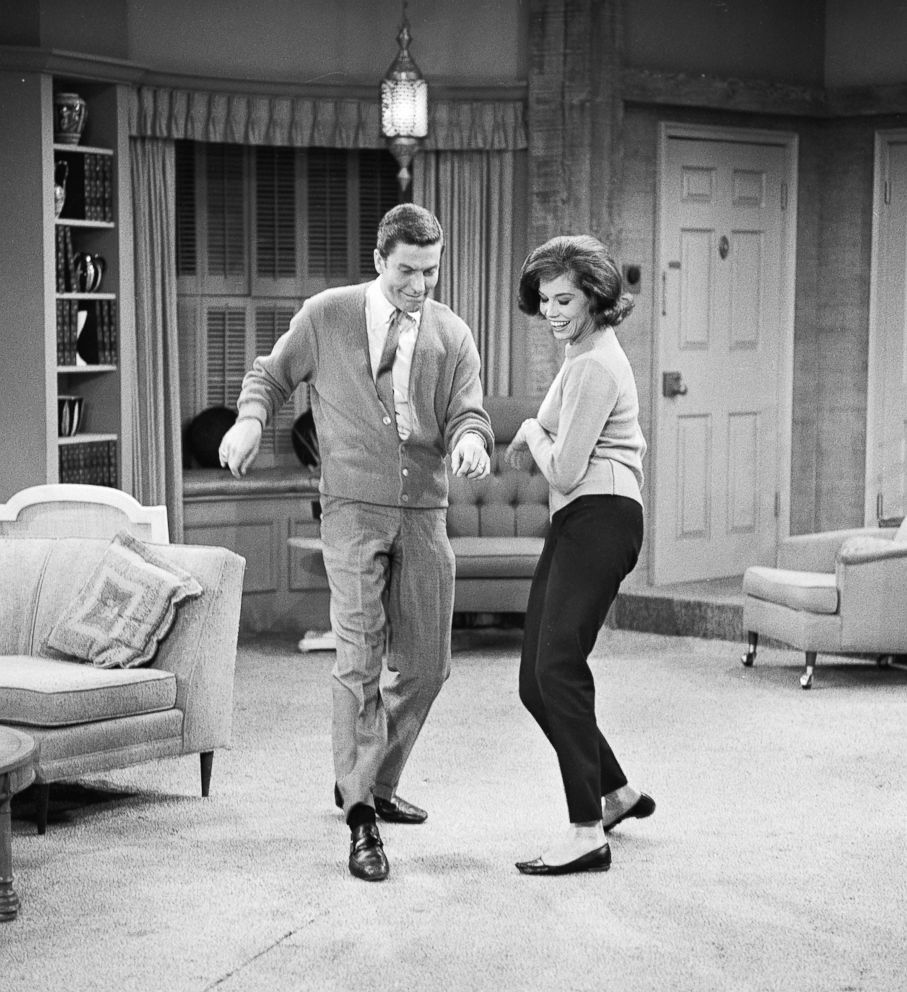
Throughout the late 1950s, Moore continued to build experience through guest appearances and supporting parts. Her major breakthrough came in 1961 when she was cast as Laura Petrie on The Dick Van Dyke Show. Recommended personally by Danny Thomas—who remembered her as “the girl with three names” from a previous audition—Moore became an instant sensation. As Laura Petrie, she brought charisma, comedic timing, and warmth to the role of a modern suburban wife. Her fashion choices, including her famous capri pants, challenged the era’s rigid television norms and reflected the clothing real women wore. Moore’s work earned her the first of her seven Primetime Emmy Awards, launching her into national stardom.
But it was The Mary Tyler Moore Show (1970–1977) that cemented her legacy as a pioneer. Produced by Moore and her then-husband Grant Tinker under their company MTM Enterprises, the sitcom broke unprecedented ground. As Mary Richards—a single, career-focused woman thriving in a Minneapolis newsroom—Moore brought to life a character who was neither a wife nor a mother, but a professional navigating adulthood on her own terms. At a time when women on TV were nearly always defined by marriage or family, Mary Richards represented liberation, self-sufficiency, and the right to choose one’s own path.

The show was both a cultural touchstone and a critical triumph. Over seven seasons, it won 29 Emmy Awards, and Moore herself earned three for Best Lead Actress in a Comedy Series. This record remained unbroken until 2002, when the sitcom Frasier achieved its 30th Emmy. Moore’s portrayal inspired countless women to see themselves as capable, empowered, and deserving of a place in the workforce. Moore’s influence extended far beyond the screen, helping usher in a new era of feminist storytelling in television.
Moore also found success in dramatic film roles. Her performance in Robert Redford’s Ordinary People (1980) earned her an Academy Award nomination for Best Actress and showcased her remarkable breadth as a performer. She continued to act on stage and screen throughout her career, earning multiple Golden Globe Awards, a Special Tony Award (1980), and the Screen Actors Guild Lifetime Achievement Award (2011).

Beyond her artistic achievements, Moore was a passionate advocate for health and social causes. In 1969, Moore was diagnosed with type 1 diabetes, a chronic condition that affects the body’s ability to produce insulin, after a routine blood test. At the time of her announcement, Moore stated that the doctors treating her "did not know how I was still alive and walking around. But within 48 hours, I was brought back to normal, and then began the hard part—living with the disease." In 1984, she became the International Chairperson for the Juvenile Diabetes Research Foundation, using her celebrity status to advocate for increased funding and awareness of type 1 diabetes. Through congressional testimony, public outreach, and tireless fundraising, she used her platform to support scientific research and improve the lives of millions affected by the disease by fostering a broader public understanding of diabetes management and care.
By the time of her passing in 2017, Mary Tyler Moore had become not just a beloved entertainer but a symbol of empowerment. She broke barriers, changed expectations, and proved—on and off screen—that women could “turn the world on with their smile,” their ambition, and their determination to shape their own stories.
Marlo Thomas (1937-) Actress, producer, and activist who brought independent women to the small screen.
Marlo Thomas has spent more than six decades redefining what women can be in television, film, publishing, and public life. An actress, producer, author, and activist, Thomas is best known for her trailblazing role in That Girl (1966–1971), where she helped usher in a new era of female representation—one centered on independence, ambition, and self-determination.
Born Margaret "Marlo" Julia Thomas in Detroit, she grew up in a household shaped by the entertainment industry. Her father, comedian and producer Danny Thomas, was a household name, but Thomas forged her own path. She began her acting career in 1960, appearing in a wide range of popular television series including Bonanza, McHale’s Navy, Ben Casey, The Joey Bishop Show, The Many Loves of Dobie Gillis, My Favorite Martian, and The Donna Reed Show. These early roles showcased her versatility and set the stage for bigger opportunities.
Her breakthrough arrived in 1965, when director Mike Nichols cast her in the London production of Barefoot in the Park. The role sharpened her comedic skills and affirmed her ability to anchor a production—momentum she carried into her most defining project the following year.

When That Girl premiered in 1966, American television had rarely seen a female character like Ann Marie: a single, ambitious actress living on her own in New York City, working temp jobs while chasing her dreams. Marlo Thomas not only starred in the series but also produced it, making her only the fourth woman in history—after Gertrude Berg, Lucille Ball, and Betty White—to produce her own television show.
Ann Marie was intentionally crafted as a modern woman, one whose life did not revolve around marriage or domesticity. In the midst of the growing feminist movement, she offered viewers—especially young women—a new kind of role model: confident, independent, career-focused, and unafraid to chart her own course. That Girl became a precursor to later feminist icons like Mary Richards in The Mary Tyler Moore Show and Murphy Brown in the series of the same name.

Thomas’ work on the series solidified her as a creative force in an era when women rarely held power behind the camera. Her advocacy for nuanced, empowering portrayals of women helped shift industry norms and demonstrated that stories about independent women were not only meaningful but commercially successful.
Beyond That Girl, Thomas built an impressive résumé as a producer, author, and performer. Her creative contributions have earned her four Emmy Awards, a Golden Globe Award, a Grammy Award, a Peabody Award, and numerous honorary recognitions. Whether acting on stage, writing bestselling books like Free to Be… You and Me, or producing socially conscious programming, she has continually used storytelling to inspire connection, empathy, and positive change.

Thomas is also a passionate advocate for children’s healthcare. Inspired by her father’s founding of St. Jude Children’s Research Hospital in 1962, she became its National Outreach Director, raising unprecedented awareness and funds. Her leadership has helped ensure that families never receive a bill for treatment, travel, or housing—a mission that has transformed countless lives facing devastating illnesses.
In recognition of her cultural and humanitarian impact, Thomas received the Presidential Medal of Freedom in 2014, the nation’s highest civilian honor. Thomas has not only transformed Hollywood but is also changing lives.
Marlo Thomas has spent her life illuminating possibilities—for women in Hollywood, for children in need, and for audiences everywhere. Through her groundbreaking work, she proved that a woman can be the star of her own story—and help others shine along the way.
Carol Clover (1940-) A film theorist whose work on gender and horror cinema changed how we view "Final Girls."
Carol J. Clover has long been one of the most influential voices in modern film theory, particularly within the horror genre. An American author, educator, and film theorist, Clover earned both her undergraduate and graduate degrees from the University of California, Berkeley, where she later joined the faculty. Today, she is a Professor Emerita of Medieval Studies and American Film, a dual specialization that speaks to her interdisciplinary approach and her deep interest in storytelling, myth, and cultural history.

Although she built her academic foundation in medieval literature and early Northern European studies, Clover’s most impactful work emerged from her pivot into contemporary film analysis—specifically horror. In 1987, she published the groundbreaking article “Her Body, Himself: Gender in the Slasher Film,” which introduced one of the most widely recognized concepts in horror criticism: the “Final Girl.”
The “Final Girl” refers to the last surviving female character in many slasher films—the lone woman who confronts the killer, endures the terror, and often lives to tell the story. Clover noted that audiences initially align themselves with the killer’s gaze, but as the narrative progresses, they shift their identification to the surviving girl. This transition, she argued, reveals a fascinating complexity in gendered spectatorship. The Final Girl is not merely a victim; she survives because she is observant, resourceful, morally grounded, and emotionally resilient.
Long before the term became part of mainstream horror vocabulary, Clover recognized patterns that filmmakers and viewers had been subconsciously responding to for years. Classic characters such as Sally Hardesty in The Texas Chain Saw Massacre, Laurie Strode in Halloween, Ellen Ripley in Alien, Nancy Thompson in A Nightmare on Elm Street, and Sidney Prescott in Scream would come to embody Clover’s theory—heroes who challenged expectations of femininity, strength, and endurance.

Clover expanded her ideas in her influential 1992 book Men, Women, and Chainsaws: Gender in the Modern Horror Film, now regarded as one of the most important scholarly works on the genre. In this text, she examined how horror films blur rigid gender boundaries and reflect cultural anxieties about power, sexuality, and survival. Rather than dismissing slasher films as lowbrow entertainment, Clover argued that they were rich texts worthy of serious scholarly consideration.
Her work validated the emotional and psychological complexity of horror and helped establish the genre as a legitimate field of academic study. Film scholars, critics, and creators across the industry now view her theories as essential foundations for understanding how horror represents—and often subverts—gender roles.
Before Clover’s research, discussions of horror often centered on gore, shock value, and sensationalism. Clover reframed the genre as a powerful site for examining social issues. Her insights encouraged filmmakers to rethink how they portray female characters and helped viewers recognize the cultural significance of the stories unfolding on screen.

Today, Clover’s work influences everything from modern horror films to feminist media studies and even the branding of contemporary “Final Girl” narratives in pop culture. The rise of empowered heroines in franchises like Scream, Halloween (reboots), and Fear Street can be traced back to the vocabulary and analytical framework Clover introduced.
Carol J. Clover didn’t just define a trope—she reshaped an entire genre. Through her bold, imaginative scholarship, she opened the door to deeper conversations about gender, power, and the enduring appeal of horror. Her legacy continues to inspire filmmakers, scholars, and audiences to see horror not as a guilty pleasure but as a lens for understanding the world.
Each of these women left a lasting mark on the industry, and I’m honored to share their stories.
What's Next?
Just because March is over doesn’t mean the celebration stops. I’ll continue adding new profiles as I complete them, so be sure to follow along on Instagram (@writer_alliey_michelle) to see the rest of this year’s honorees.
Want to explore past years’ features? Check out some of my previous Women in Film History posts:
Join the Conversation
Who is a woman in film history who inspires you? Drop a comment below or join the discussion on Instagram! If you enjoyed this series, share this blog post with fellow film lovers so we can continue celebrating the incredible women who shaped the screen.
Thanks for following along this Women’s History Month—I look forward to sharing more soon!


Comments